Category Archives: Science

A Simpler Start to Longevity Medicine in Primary Care

By Dr. Silvija Valdonė Alšauskė, MD

Longevity medicine is a rapidly evolving field that draws on cutting-edge science to help people live healthier, longer lives. While the research behind it is often complex, primary care providers don’t need access to advanced technology or expensive testing to begin making a difference. In fact, the journey toward better aging can—and should—start with something much simpler.

Although whole-body imaging or genetic sequencing may offer deep insights, these tools are rarely feasible in everyday practice due to cost, access, and patient-specific factors. Instead, a more realistic and effective approach begins with a core set of evidence-based tests and a structured clinical assessment.

That’s why we’ve developed a practical testing protocol tailored to the realities of primary health care. This “minimum viable” longevity screening strategy combines insights from international guidelines in geroscience, healthy aging, and evidence-based preventive medicine. It’s designed to be straightforward, actionable, and easy to repeat as part of routine care.

By starting with the basics and individualizing the process over time, we can begin to shift from reactive to proactive care. The goal is early detection of risks, targeted interventions to delay aging-related decline, and long-term support for optimizing biological age and extending healthspan.

Longevity medicine doesn’t have to be exclusive or elite. As technology evolves and healthcare systems adapt, there’s a clear path toward broader access and integration into everyday care. To make this vision a reality, we need practical tools, inclusive policies, and a shared commitment to prevention—starting with the first conversation between a patient and their doctor.

  1. Initial Patient Assessment
  • Comprehensive Medical History:
    • Chronic disease risk factors (CVD, cancer, diabetes, neurodegeneration) and  validated risk-prediction questionnaires (e.g., cardiovascular, frailty)
    • Complaints
    • Family history of age-related illnesses
    • Medication/supplement use, allergies, vaccination history, implemented screening programs
  • Lifestyle & Functional Assessment:
    • Physical activity, nutrition, sleep, stress
    • Smoking, alcohol, other substances, social participation
  • Psychosocial & Cognitive Screening:
    • Mood/depression (standardized tools and questionnaires)
    • Cognitive impairment (e.g., Mini-Cog, MoCA as available)
    • Social support and loneliness assessment
  1. Physical Examination
  • Vital Signs:
    • Blood pressure, resting heart rate, respiratory rate, temperature, oxygen saturation
  • Anthropometrics:
    • Height, weight, BMI, waist circumference
    • Body composition if equipment available (e.g., BIA)
  • Systematic Physical Exam:
    • Cardiovascular, respiratory, abdominal, neurological, musculoskeletal
    • Sensory function: vision, hearing
    • Oral health screen (as often neglected in aging protocols)
  • Functional Tests:
    • Grip strength (dynamometer or handgrip tool)
    • Gait speed (timed walk, e.g., 4m or 6m test)
    • Balance tests (if high frailty risk)
    • ECG (if risk factors present)
  • Optional:
    • Bone mineral density by risk stratification (if available)
    • Assessment for sarcopenia/frailty (Short Physical Performance Battery, chair rise test)
  1. Core Laboratory Panel

Annual baseline (repeat if clinically indicated):

  • Metabolic Panel:
    • Fasting glucose and/or HbA1c
    • Lipid profile (total cholesterol, LDL, HDL, triglycerides)
    • Liver function tests (ALT, AST, GGT, bilirubin, albumin)
    • Renal function (creatinine, urea/BUN, GFR)
    • Homocysteine
  • Blood Count:
    • Full blood count (CBC), with particular attention to red cell indices (RDW for aging risk signals)
  • Inflammatory Markers:
    • hs-CRP (high-sensitivity C-reactive protein) if available
    • Erythrocyte sedimentation rate (ESR)
  • Thyroid Profile:
    • TSH, free T4, free T3
  • Vitamin D:
    • 25(OH)D level
  • Urinalysis:
    • To screen for diabetes, renal disease, infections
  • Electrolytes:
    • Sodium, potassium, calcium
  • Optional if resources allow:
    • Insulin, C-peptide
    • B12 and folate
    • Sex hormones if symptoms suggestive
    • Ferritin, iron studies
    • Albumin
    • Interleukin-6
    • TNF-alfa
    • Creatine kinase and Lactate dehydrogenase (LDH)
  1. Additional/Optional Tests (as resources allow or by risk profile)
  • Cardiovascular:
    • Echocardiogram if indicated
  • Cancer Screening:
    • Follow guidelines by age/sex (colon, breast, prostate, cervical, skin, etc.)
  • Advanced Longevity Markers (typically for specialized settings):
    • Assess methylation (“epigenetic clocks”), telomere length, proteomics—these are not routine in primary care, currently for research/specialty clinics
  • Microbiome or advanced nutrition panels (select cohorts/available resources)

 Literature: 

  1. Mironov S, Borysova O, Morgunov I, Zhou Z, Moskalev A. A Framework for an Effective Healthy Longevity Clinic. Aging Dis. 2024 Jul 15;16(4):1971-1986. doi: 10.14336/AD.2024.0328-1. PMID: 38607731; PMCID: PMC12221401.
  2. World Health Organization. Integrated care for older people (ICOPE): guidance for person-centred assessment and pathways in primary care, 2nd ed. Geneva: World Health Organization; 2024. Available from: https://www.who.int/publications/i/item/9789240103726
  3. Department of Health – Abu Dhabi. Healthy Longevity Medicine Clinic Standard. Version 1. Abu Dhabi: Department of Health; 2024. Available from: https://www.doh.gov.ae/en/resources/standards
  4. Tavassoli N, de Souto Barreto P, Gillette-Guyonnet S, Rolland Y, Vellas B. Implementation of the WHO integrated care for older people (ICOPE) programme in clinical practice: a prospective study. Lancet Healthy Longev. 2022;3(6):e394–e404.
  5. Bischof E, et al. Longevity medicine: upskilling the physicians of tomorrow. Aging Clin Exp Res. 2023;35(4):759–761.


Happy Metchnikoff Day! May 15, 2025 – The 180th anniversary of Elie Metchnikoff – the founder of Gerontology

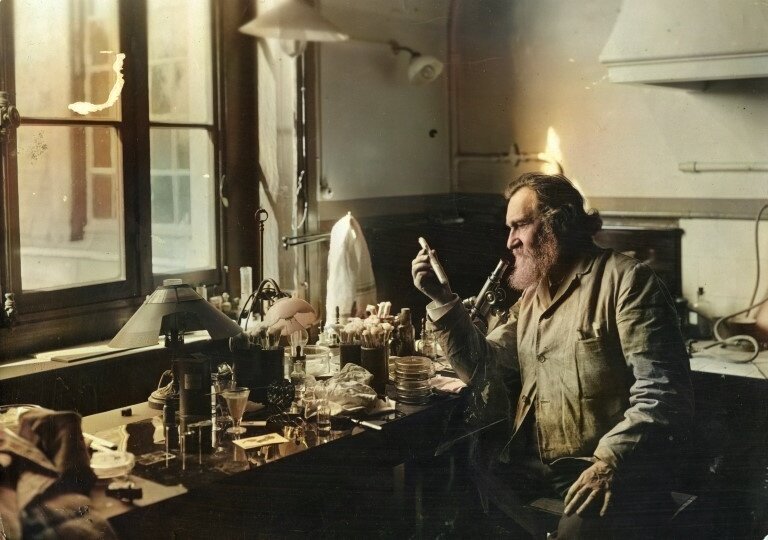
Metchnikoff 15 May 2025On May 15, there is a significant date in the longevity world – the 180th anniversary of the birth of Elie Metchnikoff (15 May 1845 – 15 July 1916) – a Nobel Laureate, a founder of cell immunology, and THE founder of the modern science of aging and longevity – GERONTOLOGY, the person who coined the very term “gerontology” in 1903, and paved the way toward its development, from the recognition of aging as a medical condition, to specific areas of interventions for healthy longevity – such as probiotics and microbiome treatments, immunotherapies of aging (vaccines against aging), general healthy longevity promoting and rejuvenative lifestyle regimens.

https://www.longevityhistory.com/read-the-book-online/#_Toc328319983 

It is beneficial for the proponents of a field to commemorate the field’s founding figures, not just to honor their legacy, but to do some “soul searching” of the successes and failures along the way, and seek ways toward future development and improvement. 

In 2015, on Metchnikoff’s 170th anniversary, many representatives of the longevity community, in several countries, commemorated Metchnikoff’s contribution, with educational events and publications, creating the special “International Metchnikoff Day” campaign around May 15, which helped build up the longevity community and drew additional interest to the longevity field, including the professional community, general public and the press. See an overview of the “Metchnikoff Day” on his 170th anniversary on 15 May 2015, and yet another celebration of the Metchnikoff Day on his 175th anniversary around 15 May 2020.

https://www.longevityforall.org/170th-anniversary-of-elie-metchnikoff-the-founder-of-gerontology-may-15-2015/

https://www.longevityforall.org/anniversary-of-the-founder-of-gerontology-elie-metchnikoff-lessons-from-history-and-hope-for-the-future/

On May 15, 2025, we mark the Metchnikoff Day on his 180th anniversary. Few special events and publications commemorate this occasion. Many other events and topics command global attention. Yet, this day is an opportunity to encourage the historical evaluation, analyzing and strategizing the longevity field, building the longevity community and drawing additional interest. We can express our gratitude to the historical creators of healthy longevity science and medicine, and boost the hope of emulating and hopefully surpassing their achievements!

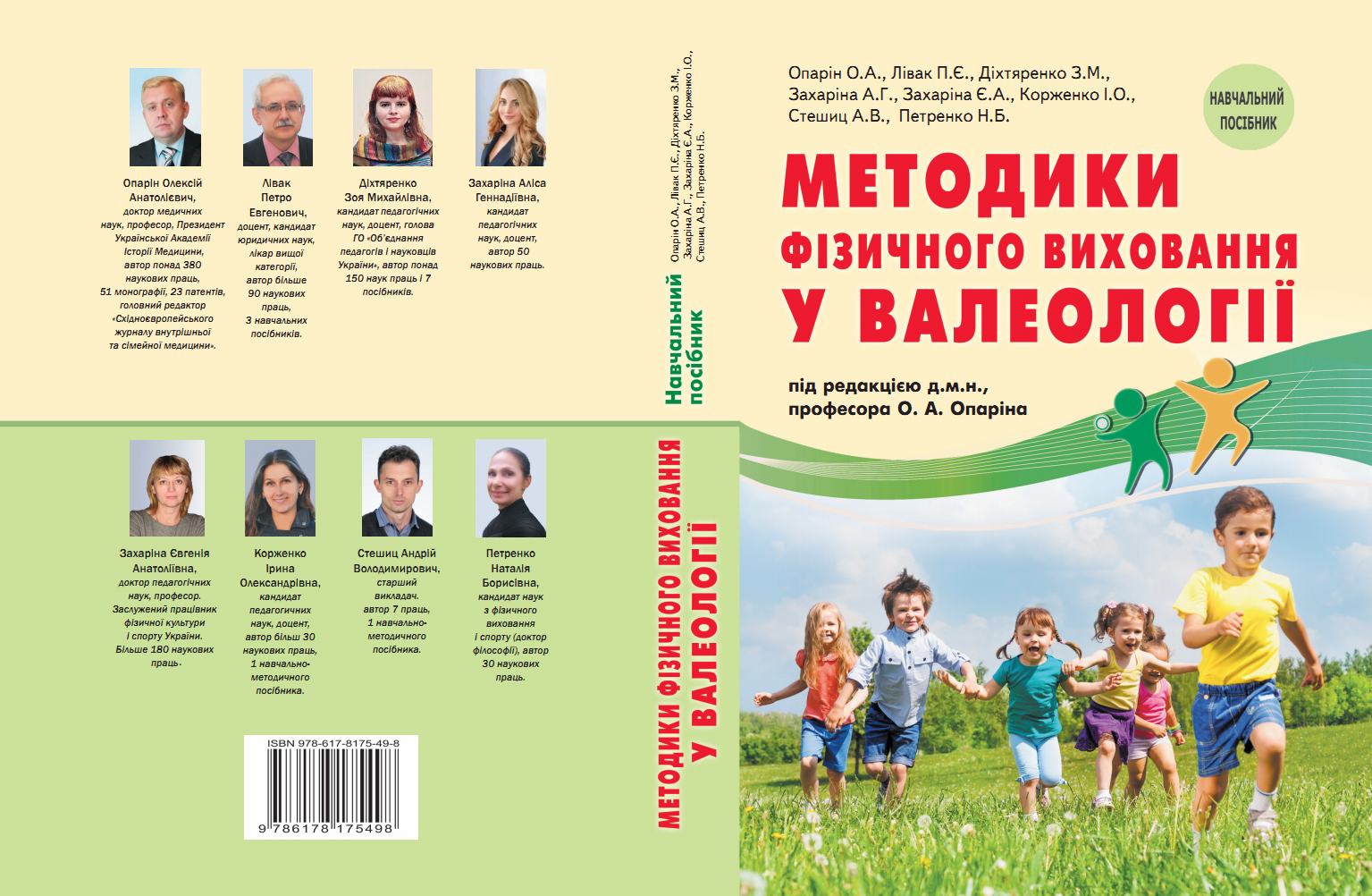
Methods of physical education in valeology (healthy living). New Ukrainian textbook

Valeology 2_Page1ПРИВАТНИЙ ВИЩИЙ НАВЧАЛЬНИЙ ЗАКЛАД
«УКРАЇНСЬКИЙ ГУМАНІТАРНИЙ ІНСТИТУТ»
АСОЦІАЦІЯ «ВЕТЕК – РУХ ЗА ДОВГОЛІТТЯ ТА ЯКІСТЬ ЖИТТЯ» (Ізраіль)
ГО «ОБ’ЄДНАННЯ ПЕДАГОГІВ І НАУКОВЦІВ УКРАЇНИ
Опарін О.А., Лівак П.Є., Діхтяренко З.М.,
Захаріна А.Г., Захаріна Є.А., Корженко І.О.,
Стешиц А.В., Петренко Н.Б.
Методики фізичного виховання у валеології
Навчальний посібник
Під редакцією д.м.н., професора О.А. Опаріна
Харків
«Факт»
2025

Зміст
Передмова………………………………………… 4
Розділ 1. Роль та розвиток фізичного самовиховання студента у валеології……………………….. 6
Розділ 2. Використання інноваційних підходів в процесі впровадження цифрових освітніх платформ та дистанційних технологій у сфері фізичної культури та валеології…………………………… 35
Розділ 3. Природно-біологічні основи рекреаційно-оздоровчої рухової активністі різних верств населення……………………………..109
Розділ 4. Фітотерапевтичні засоби для відновлення та підвищення спортивної працездатності……………………204
Розділ 5. Методологія використання корегувально-танцювальних підходів фізичного розвитку дітей дошкільного віку……………………………………………228
Розділ 6. Збереження і зміцнення здоров’я — цінність-ціль для учнів, військових ліцеїстів, студентів, курсантів, спортсменів бойового хортингу: об’єкт для формування активної життєвої позиції………………………………273
Глосарій…………………………….335
Список використаної літератури………………………………………………….403

Передмова
Сьогодні проблема валеології є однією з провідних у сучасній медичній науці про що чітко свідчить зниження показників якості життя, зростання захворюваності.
Водночас сьогодні спостерігається тенденція до формування, так званої коморбідної патології, коли в однієї людини відзначаються захворювання відразу з боку кількох органів та систем. Одночасно з цим проблема валеології є однією з центральних в соціальній сфері, про що свідчить: зростання показників розпаду сім’ї, зростання показників поширення алкоголізму, наркоманії, тютюнопаління, токсикоманії. Все це також свідчить про те, що проблема здорового способу життя сьогодні дуже актуальна, як ніколи. Одночасно з цим сьогодні відзначається чітка тенденція до ожиріння в сучасному суспільстві, яке тягне за собою цілу групу захворювань, як внутрішніх органів, так і органів ендокринної системи. Одночасно з цим валеологія є наукою, яка може сприяти профілактиці цілого ряду захворювань.
Представлений навчальний посібник «Методики фізичного виховання у валеології», підготовлений вченими Українського
гуманітарного інституту на чолі з професором О.А. Опаріним, має безумовну наукову значимість і практичну цінність.
Дуже цінним є те, що в ньому наведені наукові дослідження та відпрацювання авторського колективу, що показує цінність його у своєму практичному застосуванні. Посібник має самостійні завдання для студентів, які дають змогу їм своєчасно перевірити свої знання. Також список використаної літератури містить майже усі ключові джерела з представлених питань. Враховуюче все вищезазначене, даний навчальний посібник може бути рекомендований до затвердження, подальшого друку та впровадження у систему Вищої школи.
Професор Ілля Стамблер,
Президент АСОЦІАЦІЇ «ВЕТЕК – РУХ ЗА ДОВГОЛІТТЯ
ТА ЯКІСТЬ ЖИТТЯ» (Ізраіль)

180th anniversary of Elie Metchnikoff – the founder of Gerontology – May 15, 2025

Metchnikoff 15 May 2025 AnniversaryOn May 15, there is a significant date in the longevity world – the 180th anniversary of the birth of Elie Metchnikoff (15 May 1845 – 15 July 1916) – a Nobel Laureate, a founder of cell immunology, and THE founder of the modern science of aging and longevity – GERONTOLOGY, the person who coined the very term “gerontology” in 1903, and paved the way toward its development, from the recognition of aging as a medical condition, to specific areas of interventions for healthy longevity – such as probiotics and microbiome treatments, immunotherapies of aging (vaccines against aging), general healthy longevity promoting and rejuvenative lifestyle regimens.

https://www.longevityhistory.com/read-the-book-online/#_Toc328319983 

It is beneficial for the proponents of a field to commemorate the field’s founding figures, not just to honor their legacy, but to do some “soul searching” of the successes and failures along the way, and seek ways toward future development and improvement. 

In 2015, on Metchnikoff’s 170th anniversary, many representatives of the longevity community, in several countries, commemorated Metchnikoff’s contribution, with educational events and publications, creating the special “International Metchnikoff Day” Campaign around May 15, which helped build up the longevity community and drew additional interest to the longevity field, including the professional community, general public and the press. See an overview of the “Metchnikoff Day” on his 170th anniversary on 15 May 2015. Perhaps we could repeat this happening also on the 180th anniversary, on 15 May 2025.

https://www.longevityforall.org/170th-anniversary-of-elie-metchnikoff-the-founder-of-gerontology-may-15-2015/ 

It may be also beneficial to commemorate Metchnikoff’s 180th anniversary, with more special events and publications, to help the historical evaluation, analyzing and strategizing the longevity filed, building the longevity community and drawing additional interest. Longevity enthusiasts are encouraged to organize such events, meetings and publications, on Metchnikoff’s anniversary on May 15, or around it in May! This reminder of Metchnikoff’s anniversary is made in advance, as preparations for commemoration may take time. It is also possible to mention Metchnikoff legacy, as a vital part of the longevity movement history, in existing longevity events, not necessarily planned in relation to Metchnikoff. 

For example, in Israel, there are longevity events in May, such as the Sheba Longevity conference on May 7-8, and the longevity session at the Biomed Israel conference in Tel Aviv on May 21 https://www.longevityisrael.org/news/ – which even though not planned in relation to the anniversary, will include some mention of Metchnikoff’s legacy, at least in some of the presentations.

And there could be many events and publication directly or tangentially linked to the Anniversary.

They could express our gratitude to the historical creators of healthy longevity science and medicine, and boost the hope of emulating and hopefully surpassing their achievements!

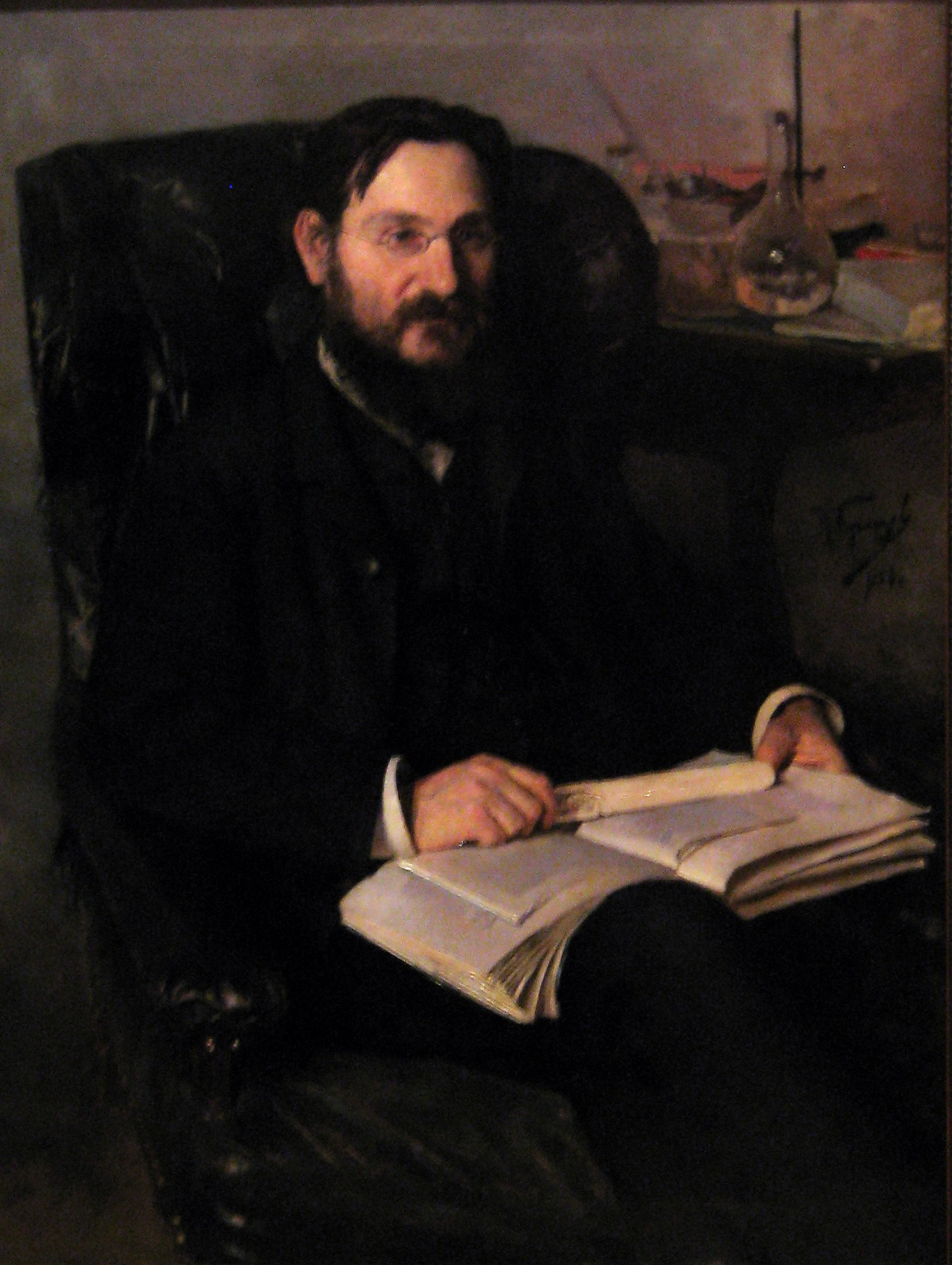
(Painting: I. Mechnikov by Nik. Dm. Kuznetsov, 1886 https://commons.wikimedia.org/wiki/Category:Ilya_Ilyich_Mechnikov)

https://www.longevityhistory.com/180th-anniversary-of-elie-metchnikoff-the-founder-of-gerontology-may-15-2025/

23 years of longevity activism

DSC07033On January 20, I created my own personal celebration, marking an anniversary of my involvement in longevity activism. On January 20, 2022, I marked 20 years of my longevity activism: 10 years part time involvement – between January 2002 (establishing our first multilingual website on life extension) to January 2012 (completing the PhD on the history of life-extensionism), and then 10 years essentially full time involvement – between January 20, 2012 (our first public demonstration for life extension) to January 2022 (encouraging calls for research proposals on aging and healthy longevity).

https://www.longevityforall.org/20-years-of-longevity-activism/

https://www.facebook.com/media/photoalbum/

Continuing to keep this anniversary, 3 more years of longevity activism have passed, more work was done.

 2022 

In 2022, the activity mostly focused on writing academic and popular papers, and educational promotions on line at conferences and lectures.
https://www.longevityisrael.org/longevity-education-in-2022/

2023 

The activities in 2023 mostly focused on developing the Vetek (Seniority) Association – the Movement for Longevity and Quality of Life in Israel, its conference (Longevity Nation, on March 26-27, 2023), online platform, collaborations, administration, policy outreach, public demonstration and campaigns, media coverage, scientific and popular scientific publications.
https://www.longevityisrael.org/vetek-association-yearly-report-2023/   

2024 

The activities in 2024 mostly focused on developing International Longevity Alliance (ILA), in particular encouraging the Longevity Month campaign in October and increasing the ILA membership and exposure.

https://www.longevityforall.org/ila-yearly-report-2024/

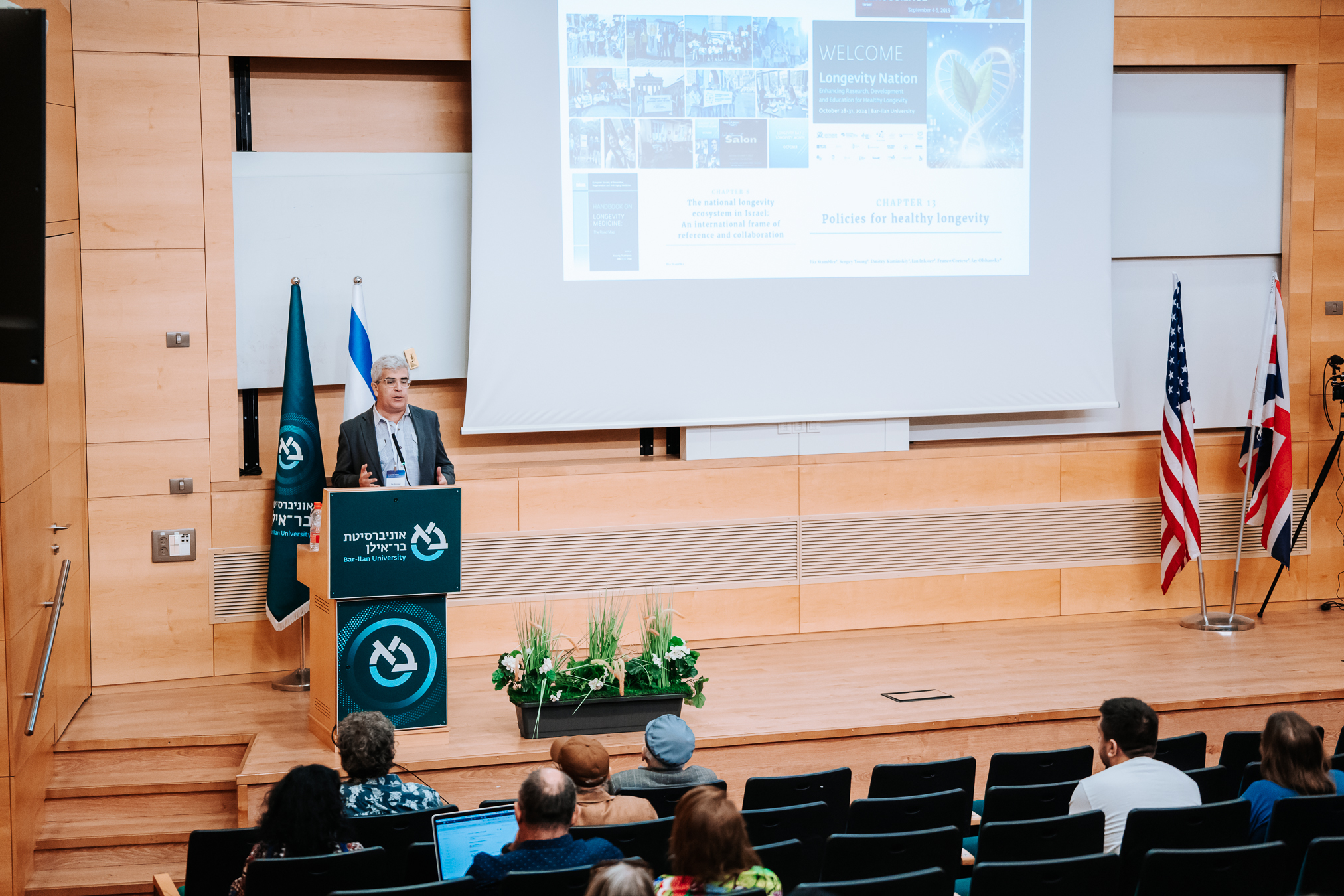
and developing the Vetek (Seniority) Association – the Movement for Longevity and Quality of Life in Israel, especially organizing the Longevity Nation conference in Bar-Ilan University on October 28-31 (end of the Longevity Month) and associated promotions and partnerships.

https://longevitynation.org/

https://www.longevityisrael.org/

In relation to activism (generally strengthening the involvement in the longevity field), also research and educational work was done (publications and conferences).

https://www.longevityhistory.com/about-the-author/   

In more details, during 2024, I published 15 academic papers (6 book chapters and 9 peer-reviewed articles, 7 alone and 8 in co-authorship – 13 printed in 2024, and 2 more went to print during the year), altogether published 76 academic papers (27 book chapters and 49 articles), plus 2 books (h-index 19, ~2660 citations, ~2300 citations since 2019).
https://www.longevityhistory.com/about-the-author/  
https://scholar.google.co.il/citations?user=5xHyqe0AAAAJ&hl=en

https://www.facebook.com/photo.php?fbid=10159210233619159&set=pb.672869158.-2207520000&type=3

In 2024, I was strongly involved in organizing 2 international conferences on longevity research: The International Baltic Conference on Healthy Longevity in Riga, Latvia (https://longevitybaltics.org/) and the Longevity Nation conference in Tel-Aviv, Israel (promoting the longevity field in Israel and cooperation with Israel in the longevity field, despite the current situation here https://longevitynation.org/)

https://longevitynation.org/videosandphotos/ 

Overall, during 2024, participated as an invited speaker in 10 international academic conferences, physically and online, altogether presented as an invited speaker in 75 academic conferences. https://www.longevityhistory.com/about-the-author/  

Considering in more details the activities in Israel, the Vetek (Seniority) Association – the Movement for Longevity and Quality of Life, Israel, in 2024, received a good governance certificate for the 7th year in a row, and brought into the association about 100,000 USD in donations.

https://www.longevityisrael.org/donate/

https://longevitynation.org/register-and-donate/

https://www.longevityisrael.org/news/

https://www.longevityisrael.org/press/

Largely thanks to the advocacy work at Vetek association, there were encouraged and formulated calls for research proposals on aging and healthy longevity in Israel.

https://www.longevityisrael.org/healthy-aging-is-included-into-the-israel-national-call-for-research-proposals-by-the-ministry-of-innovation-science-and-technology/ 

Also, contributed to developing the International Longevity Alliance (ILA), which, in 2024, grew to include 68 non-profit associations and social enterprises as federated members, working in 58 countries https://longevityalliance.org/members/

https://www.longevityforall.org/ila-yearly-report-2024

The plans for 2025 are to continue the promotion of healthy longevity research, development and education. Planning to produce in 2025 a new collected volume “Healthy Longevity: Policies and Practices” in the Springer Nature Healthy Aging and Longevity series, that will hopefully encourage the healthy longevity policy discussion and outreach, in academia and among decision makers and the general public. https://www.springer.com/series/13277  
Additional publications are in progress.
In 2025, planning to be strongly involved in the organization of several international conferences on healthy longevity, in Israel (Longevity Nation 2025, in Bar-Ilan University on June 25-26, 2025 https://longevitynation.org/) and several other countries, including Portugal (Porto), Latvia (Riga), Switzerland (Geneva) and perhaps others. Thereby also hoping to encourage more international cooperation in the longevity field.

Hopefully, it will be possible to make or encourage additional contributions to our common goal of healthy longevity for all.

Hoping for a continuation of productive activism for the promotion of healthy longevity.

Sincerely, Ilia Stambler
https://www.longevityforall.org/20-years-of-longevity-activism/

https://www.longevityforall.org/23-years-of-longevity-activism/

https://www.longevityhistory.com/about-the-author/

DSC07042


International Longevity Alliance UK (ILA UK) registered

Congratulations on the official registration of International Longevity Alliance UK (ILA UK) as a charity in the UK!

Thank you very much to all the members who joined this effort!

Our perseverance succeeded! Now, hopefully, a new chapter will start for the international longevity movement, as improvements can be expected in the coordination, presentation, fund-raising and project management by and for the longevity community.

ILA UK (incorporated in the UK) is a separate legal entity, and is a federated member of ILA (incorporated in France). Currently, there are over 55 ILA federated members operating in over 45 countries (https://longevityalliance.org/members/). And so decisions for particular longevity-promoting actions and representations will be made, on a case by case basis, as pertains each legal entity, and collegially for collaborative actions and representations.

For now the website associated with ILA UK is https://www.longevityforall.org/

The first Federated members of ILA UK (22 member organizations) are the following (a process to include more federated members will be put in practice later on):

Vetek (Seniority) Association – the Movement for Longevity and Quality of Life, Israel. Representative: Ilia Stambler

Heales (Healthy Life Extension Society), Belgium. Representative: Didier Coeurnelle

Association Française Transhumaniste. AFT-Technoprog, France. Representative: Didier Coeurnelle

Humanity Plus, Inc. United States. Representative: Natasha Vita-More

Društvo za vitalno podaljševanje življenja Slovenije (in English: Society for vital life extension of Slovenia), Slovenia. Representative: Martin Lipovšek

Healthspan Action Coalition, United States. Representative: Melissa King

Longevity Escape Velocity Foundation, United States. Representative: David Wood

Longévité & Santé, France. Representative: Edouard Debonneuil

Biogerontology Research Foundation, United Kingdom. Representative: Dmitry Kaminsky

Atlas Initiative CIC, United Kingdom. Representative: Ian Inkster

Canadian Longevity Association, Canada. Representative: Chris Linnell

Live Forever Club CIC, United Kingdom. Representative: Adrian Cull

Longevity Alliance Baltic, Latvia. Representative: Ugis Kletnieks

Longevity Alliance Denmark, Denmark. Representative: Poul Martin Jensen

Life Extension Beyond Borders / Prolongation De La Vie Au-Dela Des Frontier, France. Representative: Lilia S. Pechakova

Italian Longevity League APS, Italy. Representative: Gianfranco Vettorello

European Society of Preventive, Regenerative and Anti-Aging Medicine (ESAAM), Switzerland. Representative: Georgios Mitrou

American Longevity Alliance, United States. Representative: Walter H. Crompton

Gesellschaft für Gesundes Altern und Prävention e. V., Germany. Representative: Alexander Tietz-Latza

SENS Research Foundation, United States Representative: Maria Entraigues Abramson

Public Health Informatics Foundation (PHIF), Bangladesh. Representative: Jakir Hossain Bhuiyan Masud

Fundación Canaria ALCASIV (Fundación Longenia para la Extensión de la Vida (R)), Spain. Representative: Cayetano Santana Gil

And the first charity trustees are the following. As per the ILA UK constitution “At each annual general members meeting, all trustees shall stand for evaluation and election by the CIO [Charitable Incorporated Organization – ILA UK] members”

The first charity trustees of ILA UK (17):

Ilia Stambler, Dmitry Kaminsky, Martin Lipovšek, Edouard Debonneuil, Natasha Vita-More, Franco Cortese, Ian Inkster, Melissa King, Walter H. Crompton, Lilia S. Pechakova, David Wood, Didier Coeurnelle, Gianfranco Vettorello, Georgios Mitrou, Maria Entraigues Abramson, Adrian Cull, Ugis Kletnieks

And here is the official registration statement from the UK charity commission

https://register-of-charities.charitycommission.gov.uk/

“We are satisfied that INTERNATIONAL LONGEVITY ALLIANCE UK is a charity and it has been entered onto the Register of Charities with the Registered Charity Number 1209533.

Our decision

The decision to register was based on our assessment of the information supplied during the application process and the declarations given in the trustee declaration form and we are satisfied that INTERNATIONAL LONGEVITY ALLIANCE UK is established for charitable purposes only for the public benefit.”

We will work for the accomplishment of the charitable purposes:

“To advance the preservation and protection of health of the entire population for the public benefit, in particular but not exclusively by:

  • Conducting research on the ageing process, age-related diseases, and prolonging healthy longevity and to publish the useful results;
  • Educating the general public, researchers, medical professionals, journalists and policy makers about the biology of ageing and prolonging healthy longevity;
  • Contributing to and commenting on policy recommendations to the general public and to policy makers, in accordance with applicable legislation, at national and international levels.”

Longevity Day and Month of October 2024

As is the ILA tradition since 2013, on June 30 – July 1 (3 months ahead) we usually begin announcing and preparing for the Longevity Day and Month campaign of October. So if you organize or participate in events for the Longevity Month, please let it be known, and we will publicize all the events together and encourage each other and the entire international longevity community.

https://www.longevityhistory.com/longevity-day-and-longevity-month/

Here is a start :

Spain

The Longevity Day will be celebrated on October 1 in Madrid.

DÍA INTERNACIONAL DE LA LONGEVIDAD
Madrid como una Zona Azul
MARTES 1 DE OCTUBRE: 10:00 – 21:30, MADRID
Ilustre Colegio Oficial de Médicos de Madrid (ICOMEM)
C/ Santa Isabel, 51 – Madrid 28012

https://www.meetup.com/madridsingularity/events/300266303/

Slovenia

On Tuesday, 8 October 2024, the Society for Vital Life Extension of Slovenia is organizing Conference on Healthy Longevity. The conference will be hybrid, happening live and over the Internet. The live event will take place in the Great Lecture Hall of Jožef Stefan Institute on Jamova cesta 39 in Ljubljana. It wil be organized as a part of the Information Society 2024 multiconference. The multiconference is an annual event hosting various conferences on technological and societal issues for 27 years. It is organized at Jožef Stefan Institute, the premier Slovenian institution for research on natural science and technology.

https://podaljsevanje-zivljenja.si/en/

Nigeria

INTERNATIONAL FUTURE OF HEALTH & TECHNOLOGY SUMMIT, with the theme: UNLOCKING REVOLUTIONARY HEALTH & MED-TECH VISTAS FOR HUMAN LONGEVITY AND WELL-BEING, organized by TAFFDS AFROLONGEVITY will take place at the University of Lagos, Yaba, Lagos, Nigeria, on October 24th – October 25th, 2024

https://conference.taffds.org

Israel

The Longevity Nation conference is organized by the Vetek association in Bar-Ilan University, Israel, at the end of the Longevity Month, on October 28-31.

https://longevitynation.org/

https://www.longevityisrael.org/longevity-nation-conference-on-october-28-31-in-bar-ilan-university/

Longevity Nation Conference – 26-27 March 2023 – Bar-Ilan University, Israel

LONGEVITY NATION - MARCH 26-27 - BIU - SAVE THE DATEThe conference: Longevity Nation –

Enhancing research development and education for healthy longevity

March 26-27, 2023

Bar Ilan University, Nanotechnology Bldg 206, Ramat Gan, Israel

This conference will explore the interdisciplinary interrelations of science, technology and society in addressing the challenges of population aging. By bringing together leading voices in the longevity space and public figures, the Longevity Nation conference will help advance ethical scientific and technological solutions for healthy longevity for the benefit of the entire society. Building on Israel’s strengths in this area, this conference will help enhance the supportive longevity ecosystem in Israel, boost the prominence of the field in Israel and strengthen Israel’s international standing and cooperation in the Longevity Field. It will help build up longevity R&D and Education support programs, for stakeholders in Israel and international collaborators.

http://www.longevitynation.org/

The registration is at the link below (the attendance is free, but registration is required). The page also includes information for possible support for Vetek (Seniority) Association – the Movement for Longevity and Quality of Life, Israel, the chief organizer of this conference.

http://www.longevitynation.org/register-free-and-donate/

Looking forward to seeing you and jointly promoting research, development and education for healthy longevity!

Ilia Stambler, PhD

Chairman of the organizing committee


הכנס – LONGEVITY NATION הגברת מחקר, פיתוח וחינוך לקידום אריכות חיים בריאים

יתקיים ב-26-27 במרץ, 2023

באוניברסיטת בר-אילן, בניין הננוטכנולוגיה 206, רמת גן

הכנס עוסק ביחסי הגומלין הבין-תחומיים של מדע, טכנולוגיה וחברה כדי לטפל באתגרים של הזדקנות האוכלוסייה האנושית. על ידי גיבוש קהילה המפגישה אנשי ציבור עם האנשים המובילים בתחום אריכות החיים, כנס LONGEVITY NATION עוזר לקדם את הפתרונות האתיים, המדעיים והטכנולוגיים לאריכות ימים בבריאות לטובת החברה בכללותה. הכנס בונה על יתרונותיה וחוזקותיה המשמעותיים של מדינת ישראל בתחומים אלה, ומטרתו לשפר את האקוסיסטמה התומכת באריכות חיים בריאים בישראל, להגביר את הנראות והבולטות של התחום בישראל ולחזק את מעמדה ושיתוף הפעולה הבינלאומי של ישראל בתחום אריכות החיים הבריאים. הכנס יסייע לבנות תוכניות תמיכה למו”פ וחינוך לקידום אריכות חיים בריאים עבור בעלי עניין בישראל ויצירת שיתוף פעולה עם גורמים בינלאומיים.

http://www.longevitynation.org/

הקישור להרשמה לכנס להלן (הכניסה חופשית אך ההרשמה נדרשת). הדף גם כולל נתונים לתמיכה בעמותת ותק – התנועה לאיכות ואריכות חיים (ע”ר), המארגנת הראשית של הכנס.

http://www.longevitynation.org/register-free-and-donate/

מצפים לראותכם ולשיתוף פעולה בקידום מחקר, פיתוח וחינוך לאריכות חיים בריאים.

ד”ר איליה סטמבלר

יו”ר הועד המארגן

Aging is a medical target in ICD-11 with 2 codes

Ageing in ICD-11 2 2022An update on the recognition of aging as a treatable medical condition in the ICD:

In the current International Classification of Diseases (ICD-11) system, for the code MG2A, the original main designation “Old age” is now fully replaced with the new one: “Aging-associated decline in intrinsic capacity” in the “General Symptoms” category (the change is now also seen in the main ICD website)!

https://icd.who.int/browse11/l-m/en#/http://id.who.int/icd/entity/835503193 

The new designation is even better for designing measurable interventions into aging than the previous ill-defined “Old age”. 

Moreover, there are about 14 “matching terms” for this MG2A Code, including “frailty of old age”, “old age atrophy”, “old age exhaustion”, “old age debility” and also “ageing” itself! All these terms allow the direct targeting of aging as a medical condition or as a set of general medical symptoms! 

https://icd.who.int/ct11/icd11_mms/en/release (search “ageing”) 

Moreover, there is a second code in the ICD-11, the XT9T extension code “Ageing-related” in the “Causality” or “Aetiology” category which also permits targeting aging as a medical indication, namely as an underlying cause or risk factor of diseases.

https://icd.who.int/browse11/l-m/en#/http://id.who.int/icd/entity/459275392 

Thus, with both codes, Aging can be now directly targeted by biomedical interventions in accordance with the present International Classification of Diseases (ICD-11). 

The contribution of longevity research advocates to this inclusion of aging into the ICD-11 as a treatable medical condition has been crucial. 

Now the task is in the hands of medical researchers and practitioners to leverage those ICD codes to design and test interventions directly into aging, including the development of evaluation criteria for the efficacy and safety of such interventions, for the benefit of older persons, prevention of aging-related diseases and extension of healthy longevity!

See our brief article, explaining the principal topics about the inclusion of Aging in the ICD-11:

Ilia Stambler, Aleksey Alekseev, Yuri Matveyev, Daria Khaltourina. Advanced pathological ageing should be represented in the ICD. The Lancet Healthy Longevity, 3(1), E11, 2022. https://doi.org/10.1016/S2666-7568(21)00305-6

Also recently, additional articles on the subject were published in The Lancet Healthy Longevity:

https://www.thelancet.com/journals/lanhl/article/PIIS2666-7568(22)00154-4/fulltext 

https://www.thelancet.com/journals/lanhl/article/PIIS2666-7568(22)00102-7/fulltext

20 Years of Longevity Activism

Making a little personal celebration: 20 years of involvement in longevity or life extension activism. 10 years ago, by January 2012, I completed my PhD thesis on the “History of Life-extensionism” and co-organized our first demonstration for life extension (on January 20, 2012) and since then became fully involved in longevity or life extension activism. And 10 years before that, around January 2002, after completing the MA, I started to work as a science writer in biotechnology and co-created our first multi-lingual site on life extension, and so became partly involved in longevity (life extension) activism. In these 20 years, one could see the massive shift of public attitude in favor of the possibility and desirability of healthy life extension, hopefully at least in some small measure also thanks to our activism. But still there is a lot of work to be done to bring this possibility and awareness closer to real implementation, to the actual achievement of aging amelioration and healthy life extension (and not a lot of time to do it…). Below are some highlights, summaries, references and pictures from those years.

Ilia Stambler

January 20, 2022


Activism - 1 - 1 February 20021. February-March, 2002. Co-creation of the first multi-lingual site on life extension “Elysian Enterprise”

https://web.archive.org/web/20031022205308/http://elysianenterprise.com/russian/chapters/medicine_science.html

https://web.archive.org/web/20030722093218/http://www.elysianenterprise.com/

activism - 2 - 27 January 2006 Imminst WTA

2. January 27, 2006. Organizing the first live ImmInst/WTA meeting on life extension in Israel in Bar Ilan University

https://www.longecity.org/forum/topic/9057-1st-isr-imminstwta-mtng-jan27-1030-biu/

 activism - 2b - 12 September 20063. September 12, 2006. Co-signing the first Longevity Dividend petition.
https://deepblue.lib.umich.edu/bitstream/handle/2027.42/75679/annals.1396.050.pdf?sequence=1
http://www.longevityforall.org/wp-content/uploads/2014/05/Longevity_Dividend_Signatories.pdf
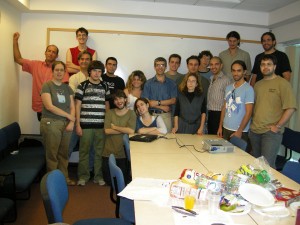
activism - 3 - 6 November 2010

4. 2006-2010. Organizing a series of seminars on life extension/transhumanism in Bar Ilan University (November 6, 2010, the 10th seminar since 2006)

http://www.singulariut.com/2010/11/260

https://www.singulariut.com/2020/10/3571

https://www.haaretz.co.il/science/1.1196720

https://archive.ieet.org/articles/pellissier20100820.html 

activism - 4 - 16 October 20115. October 16-27, 2011. First broad public and academic conferences on life-extension and transhumanism in Israel, in Tel-Aviv Cinematheque, Hemda Science Teaching Center in Tel Aviv and Van Leer Institute in Jerusalem

http://www.singulariut.com/2011/10/325

https://archive.ieet.org/articles/stambler20111101.html

https://www.facebook.com/Utopiafest.org.il/photos/t.672869158/10150390819607668/?type=3

https://archive.ieet.org/
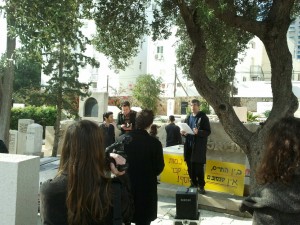
activism - 5 - 20 January 20126. January 20, 2012 Demonstration for life extension, Tel Aviv

http://www.singulariut.com/2012/01/510

https://web.archive.org/web/20121023145203/http://ieet.org/index.php/IEET/more/stambler20120126

Activism - 6 - 27 February 2012 - Knesset 3 - Copy7. February 27, 2012. Advocacy in Knesset for establishing the “Israel National Advisory Committee for the Struggle against the Disease of Aging”

http://www.singulariut.com/2012/07/601

 https://web.archive.org/web/20120720024947/http://ieet.org/index.php/IEET/more/stambler201207171

Activism - 7 - 17 July 2012 AGING AS A DISEASE LARGE - 17 July 2012 - Copy8. July 17, 2012. Publication at Institute for Ethics and Emerging Technologies (IEET) of the article “Political Struggle against the Disease of Aging” describing the first efforts of high level longevity advocacy in Knesset

http://www.singulariut.com/2012/07/601

https://web.archive.org/web/20120720024947/http://ieet.org/index.php/IEET/more/stambler201207171

activism - 8 - 20 July 2012 - longevity party9. July – August, 2012. Co-creation of the International Longevity Party

https://web.archive.org/web/20120901111034/http://ieet.org/index.php/IEET/more/6354

https://web.archive.org/web/20121023133820/http://ieet.org/index.php/IEET/more/6377

https://archive.ieet.org/articles/stambler20120823.html

https://web.archive.org/web/20181009064319/https://ieet.org/index.php/IEET2/bio/stambler/

Activism - 9 - 28 June 2012 - phd10. June 28, 2012. PhD Graduation. Department of Science, Technology and Society, Bar Ilan University. Thesis subject: “A History of life-extensionism in the twentieth century”

http://www.longevityhistory.com/

https://www.ishps.org.il/blank-9

https://www.sts-biu.org/alumni

https://www.sts-biu.org/post/2018/04/28/april-28-healthy-longevity-promotion-multidisciplinary-perspectives-dr-ilia-stambler-bar

activism - 10 - 29 August 2014 - History of Life Extensionism

11. August 29, 2014. Publication of the book: “A History of Life-extensionism in the twentieth century”

http://www.longevityhistory.com/

https://www.amazon.com/History-Life-Extensionism-Twentieth-Century/dp/1500818577

Activism - 11 - 14 December 2012

12. December 14, 2012. Gathering of the International Longevity Alliance activists at the Eurosymposium on Healthy Ageing, in Brussels, Belgium

https://hplusmagazine.com/2012/12/19/the-brussels-summit-of-longevity-activists/

Activism - 12 - 31 December 2012 ILA13. July 2012-2013. Developing International Longevity Alliance (ILA) 

www.longevityalliance.org

https://www.longevityforall.org/groups/

https://web.archive.org/web/20140112094026/http://ieet.org/index.php/IEET/more/stambler20140110

https://longevityalliance.org/about/history

https://en.wikipedia.org/wiki/International_Longevity_Alliance

activism - 13 - 10-13 March 2013 Biogerontology14. March 10-13, 2013. The 8thEuropean Congress of Biogerontology, Beer Sheva, and events and media promotions of longevity in Tel Aviv

http://www.mako.co.il/news-channel2/Weekend-Newscast/Article-5552ae448947d31004.htm

 https://www.israel21c.org/israelis-excel-in-finding-keys-to-long-life/

activism - 14 - 3-7 September 2013 Sens15. September 3-7, 2013. Sixth SENS Conference (SENS6). Reimagine Aging. Queens’ College – Cambridge UK

https://www.liebertpub.com/doi/10.1089/rej.2013.16.sens6abs

https://www.youtube.com/watch?v=EoBkf8rEGOo
activism - 13 - 1 October 2013-201516. October 1, throughout October, 2013-2021. Longevity Day and Longevity Month Campaign to raise awareness and support for healthy longevity research

https://www.facebook.com/LongevityDay

http://www.longevityhistory.com/longevity-day-and-longevity-month/

https://hpluspedia.org/wiki/Longevity_Day_and_Month

activism - 16 - 26 March 2014 - Longevity Conference Bar Ilan17. March 26, 2014. Pathways to Healthy Longevity. Israel Science Day. Bar Ilan University, Ramat Gan, Israel, additional events and media promotions of longevity research in the framework of Israel National Science Day.

https://www.ynet.co.il/articles/0,7340,L-4503579,00.html

https://youtu.be/fwO_jaffJh4

https://www.israel21c.org/rd-for-the-elderly/

activism - 14 - 1 February 201618. January – February 2016. Co-organizing the Global Healthspan Policy Institute (GHPI), Washington

https://healthspanpolicy.org/person/ilia-stambler/

https://healthspanpolicy.org/public-policy-implications/
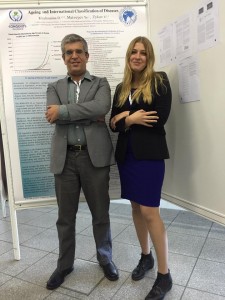
activism - 15 - 21 September 2016 - Basel19. September 21-22, 2016. 3rd International Forum on Practical Applications for Aging Research at the Basel Life Science Week. Basel, Switzerland

http://www.basel-life-science-week.eu/2016/basel-life-science-week.html
activism - 16 - 23 May 201720. May 23-25, 2017. Mixiii BioMed 2017 Conference, Tel Aviv, with a focus on aging and longevity R&D

https://www.iati.co.il/conference.php?ID=35

https://kenes-exhibitions.com/old/biomed2017/

https://www.israel21c.org/longevity-and-aging-focus-of-israeli-intl-biomed-confab/

activism - 17 - 7 August 2017 - Book Longevity promotion21. August 7, 2017. Publication of the book “Longevity Promotion: Multidisciplinary Perspectives”

http://www.longevityhistory.com/

https://www.amazon.com/Longevity-Promotion-Multidisciplinary-Ilia-Stambler/dp/1974324265/

activism - 18 - longevity promotion22. 2013-2017. The main sites for longevity promotion (created and co-created)

www.longevityisrael.org
www.longevityhistory.com

www.longevityforall.org
www.longevityalliance.org
www.healthspanpolicy.org
www.isoad.org
activism - 19 - 15 October 201723. October 15, 2017. Conference “Pathways to Healthy Longevity” Bar Ilan University (organized)

https://www.longevityisrael.org/conference/

https://www.jpost.com/HEALTH-SCIENCE/Mechanism-discovered-to-extend-life-of-mice-by-tens-of-percentage-points-507753

https://www.facebook.com/VETEK.ISRLA/posts/1593609234034686

Activism - 20 -7 November 2017 Lobby for aging preparedness24. November 7, 2017. Launch of the Knesset Lobby “For Advancing the Preparedness of the Country for the Population Aging” and the Knesset Committee “For Creating the National Masterplan on Ageing” (at the same time)

https://oknesset.org/committees/2042.html

activism - 21 - 6 December 2017 WHO25. November-December 2017. Successful campaign for the inclusion of Aging into the WHO Work Program for 2019-2023

http://www.longevityforall.org/aging-is-now-included-into-the-who-work-program-thanks/

http://www.aginganddisease.org/EN/10.14336/AD.2017.1120

activism - 22 - 29 May 2018 Birax launch26. May 29, 2018. Launch of the Britain-Israel Research and Academic Exchange on Ageing – BIRAX Ageing.

http://www.longevityisrael.org/call-for-proposals-britain-israel-research-and-academic-exchange-partnership-on-ageing-birax-ageing/

https://www.britishcouncil.org.il/en/birax/projects/ageing

https://www.britishcouncil.org.il/sites/default/files/birax_ageing_call_for_proposals.pdf

https://www.britishcouncil.org.il/en/birax/call-for-proposals

Activism - 23 - 8 May 201827. May 8, 2018. Joining of forces for longevity activism in Israel, via the Vetek (Seniority) Association – the Movement for Longevity and Quality of Life

https://en.wikipedia.org/wiki/Rafi_Eitan

https://www.maariv.co.il/news/politics/Article-564969

https://www.longevityisrael.org/scientific-board/

https://www.longevityisrael.org/news/

http://www.longevityisrael.org/press/

activism - 24 - 9 July 2018 - knesset28. July 9, 2018. Organizing a special session in Knesset at the Science and Technology Committee on “Enhancing Research, Development and Education for the Promotion of Healthy Longevity and Prevention of Aging-related Diseases”

https://www.longevityisrael.org/special-discussion-of-the-knesset-committee-on-science-and-technology-for-the-first-time-for-the-strengthening-of-research-and-development-for-improving-the-quality-of-life-and-longevity-and/

activism - 25 - 25 July 2019 Masterplan on ageing29.  July 25, 2019. Thanks to the initiative of the Vetek (Seniority) Association – the Movement for Longevity and Quality of Life, the topic of “Research, Development and Education for Healthy Longevity and Prevention of Aging-related Diseases” is included in the summary report of the Knesset Committee for Creating the National Masterplan on Aging, as a strategic area for further discussion.

http://www.longevityisrael.org/research-development-and-education-for-healthy-longevity-is-included-in-israel-national-masterplan-on-aging/

https://main.knesset.gov.il/activity/committees/labor/Pages/CommitteeReports.aspx

https://oknesset.org/meetings/2/0/2072962.html

https://oknesset.org/meetings/2/0/2076804.html

activism - 26 - 12 July 2018 activism30. July 12, 2018. Summary meeting of the Israeli Longevity Alliance (ISRLA) board

https://www.longevityisrael.org/

https://www.longevityisrael.org/news/

activism - 27 - 21 May 201931. May 21, 2019. Raising awareness about healthy longevity research, development and education in cooperation with the “Disabled, Not Half a Person” association

https://www.lohetzi.co.il/%D7%90%D7%95%D7%93%D7%95%D7%AA%D7%99%D7%A0%D7%95/
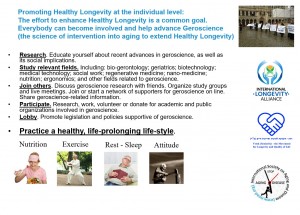
activism - 28 - 2012-2020 activism ptomotion online32. 2012-2020. Promoting longevity activism online

http://www.longevityhistory.com/outreach-materials-for-longevity-promotion/

https://www.longevityforall.org/faq-of-the-ethics-of-lifespan-and-healthspan-extension/

http://www.longevityforall.org/frequently-asked-questions-on-the-ethics-of-lifespan-and-healthspan-extension/

https://hpluspedia.org/wiki/Ilia_Stambler

Activism - 29 - 12 March 201933. March 12, 2019. Publication of the analytical report “Longevity Industry in Israel”

https://www.aginganalytics.com/longevity-in-israel

https://www.longevityisrael.org/longevity-industry-in-israel-joint-report-by-vetek-association-and-aging-analytics-agency/

https://mindmaps.longevity.international/longevity-leaders-israel

activism - 30 - 17 July 2019 US - Israel34. March – July, 2019. Initiative to include R&D on aging into US-Israel cooperation. The bill passed the US House of Representatives, but did not go further.

https://www.congress.gov/bill/116th-congress/house-bill/1837/text

http://www.longevityisrael.org/us-israel-collaboration-on-aging-related-rd-is-planned/

https://www.longevityisrael.org/the-subject-of-aging-is-removed-from-the-us-israel-assistance-bill/

https://healthspanpolicy.org/israel-can-and-should-become-an-important-contributor-to-international-geroscience-research-development-applications-and-education

activism - 31 - 4 September 201935. September 4-5, 2019. Co-organizing the conference International Perspectives in Geroscience, at Weizmann Institute of Science, with NIH sponsorship

http://www.weizmann.ac.il/conferences/IPG2019/international-perspectives-geroscience-israel

https://www.longevityisrael.org/geroscience-conference-program-weizmann-institute-september-4-5-2019/

https://nathanshockcenters.org/international-perspectives-on-geroscience-meetings

activism - 32 - 2014-2022 isoad36. 2014-2022. Outreach coordinator and executive committee member of the International Society on Aging and Disease (ISOAD), including: Publication of the position paper “The Critical Need to Promote Research of Aging and Aging-related Diseases to Improve Health and Longevity of the Elderly Population” of the International Society on Aging and Disease (ISOAD). Since its publication in December 2014, until January 2022, this position paper had over 200 academic citations, appeared in 12 languages, was submitted to several governments. More position papers by the ISOAD were published, and in 2021 ISOAD obtained the special consultative status at the UN Economic and Social Council (ECOSOC).

http://www.longevityforall.org/the-critical-need-to-promote-research-of-aging-around-the-world/

http://www.aginganddisease.org/EN/10.14336/AD.2014.1210

https://scholar.google.com/scholar?oi=bibs&hl=en&cites=1393722017588130205,11094363600232984061

https://esango.un.org/civilsociety/consultativeStatusSummary.do?profileCode=649295

http://isoad.org/Data/List/Officers

http://isoad.org/Data/List/Chapters

http://www.aginganddisease.org/EN/10.14336/AD.2017.1120

http://www.aginganddisease.org/EN/10.14336/AD.2019.1230

activism - 33 - September 2019 - Quantified Longevity Guide37. 2012-2022. Research on the evaluation of aging health, utilizing information-theoretical measures. The Quantified Longevity Guide project

https://www.longevityisrael.org/quantified-longevity-guide/

https://ec.europa.eu/eip/ageing/commitments-tracker/a3/
quantified-longevity-guide-
qlg_en

https://www.frontiersin.org/research-topics/14483/clinical-evaluation-criteria-for-aging-and-aging-related-multimorbidity

https://www.sciencedirect.com/science/article/pii/S0301008215300599?via%3Dihub

https://expertscape.com/au/information+theory/Stambler%2C+Ilia

https://expertscape.com/au/aging/Stambler%2C+I

activism - 34 - covid-1938. 2020-2021. Promoting the amelioration of aging as a critical means to fight the epidemiological (e.g. COVID-19) crises

https://www.jpost.com/opinion/we-can-do-more-to-help-the-elderly-cope-with-the-covid-19-crisis-642408

http://www.aginganddisease.org/EN/10.14336/AD.2020.0629

http://www.aginganddisease.org/EN/10.14336/AD.2020.0228

http://www.aginganddisease.org/EN/10.14336/AD.2020.0603

https://www.linkedin.com/pulse/2020-showed-need-promote-aging-ameliorating-therapies-ilia-stambler/

https://www.longevityforall.org/we-call-for-open-anonymized-medical-data-oncovid-19-and-aging-related-risk-factors/

https://www.longevityforall.org/metchnikoff-day-may-15-online-conference-may-16/

activism - 35 - 2012-2022 aging as a medical condition39. 2012-2022. Promoting the recognition of aging as a treatable medical condition

http://www.singulariut.com/2012/07/601

https://web.archive.org/web/20120720024947/http://ieet.org/index.php/IEET/more/stambler201207171

http://www.aginganddisease.org/EN/10.14336/AD.2017.0130

https://link.springer.com/referenceworkentry/10.1007%2F978-3-319-69892-2_399-1

https://www.frontiersin.org/articles/10.3389/fgene.2021.764874/full

https://www.thelancet.com/journals/lanhl/article/PIIS2666-7568(21)00305-6/fulltext

activism - 36 - 2 August 2021 - Knesset40. 2021-2022. Continued promotion of healthy longevity research, development, education and application

http://www.longevityhistory.com/about-the-author/

Updates 2022, 2023, 2024,…. (as of January 20, 2025)

Continuing to keep this anniversary, 3 more years of longevity activism have passed, more work was done.

https://www.longevityforall.org/23-years-of-longevity-activism/

2022

In 2022, the activity mostly focused on writing academic and popular papers, and educational promotions on line at conferences and lectures.
https://www.longevityisrael.org/longevity-education-in-2022/

 2023

The activities in 2023 mostly focused on developing the Vetek (Seniority) Association – the Movement for Longevity and Quality of Life in Israel, its conference (Longevity Nation, on March 26-27, 2023), online platform, collaborations, administration, policy outreach, public demonstration and campaigns, media coverage, scientific and popular scientific publications.
https://www.longevityisrael.org/vetek-association-yearly-report-2023/

2024 

The activities in 2024 mostly focused on developing International Longevity Alliance (ILA), in particular encouraging the Longevity Month campaign in October and increasing the ILA membership and exposure.

https://www.longevityforall.org/ila-yearly-report-2024/

and developing the Vetek (Seniority) Association – the Movement for Longevity and Quality of Life in Israel, especially organizing the Longevity Nation conference in Bar-Ilan University on October 28-31 (end of the Longevity Month)

https://longevitynation.org/

https://www.longevityisrael.org/

In relation to activism (generally strengthening the involvement in the longevity field), also research and educational work was done (publications and conferences).

https://www.longevityhistory.com/about-the-author/

Hopefully, it will be possible to make or encourage additional contributions to our common goal of healthy longevity for all.

Hoping for a continuation of productive activism for the promotion of healthy longevity.
https://www.longevityforall.org/20-years-of-longevity-activism/

https://www.longevityforall.org/23-years-of-longevity-activism/

https://www.longevityhistory.com/about-the-author/
DSC07033

Advanced pathological ageing should be represented in the ICD, Lancet Healthy Longevity, January 2022

ICD for PostHappy and proud to see our correspondence article published in “Lancet Healthy Longevity”, entitled “Advanced pathological ageing should be represented in the ICD

By Ilia Stambler, Aleksey Alekseev, Yuri Matveyev, and Daria Khaltourina

(free and open access)

https://doi.org/10.1016/S2666-7568(21)00305-6

And happy to join forces with another correspondence article, in the same issue of “Lancet Healthy Longevity”, with the same title, by Evelyne Bischof, Andrea B Maier, Kai-Fu Lee, Alex Zhavoronkov, and David Sinclair.

https://doi.org/10.1016/S2666-7568(21)00303-2

These articles appeared in response to a campaign raised by some gerontologists to remove the designation “Old age” from the new version of the International Classification of Diseases – ICD-11 (the code “Old Age” MG2A), as they claimed this designation would sound discriminatory against older people simply because of their age (“ageist”).

This campaign is exemplified by the article of Debanjan Banerjee et al. “Not a disease: a global call for action urging revision of the ICD-11 classification of old age” in “Lancet Healthy Longevity” to which we respond

https://www.thelancet.com/journals/lanhl/article/PIIS2666-7568(21)00201-4/fulltext

As well as others

https://www.paho.org/journal/en/articles/old-age-and-new-icd-11-position-latin-american-academy-medicine-older-persons

https://www.ageing.ox.ac.uk/blog/ICD-11-and-an-argument-about-old%20age%20

https://www1.folha.uol.com.br/folha-100-anos/2020/08/queremos-morrer-velhos-mas-nao-de-velhice.shtml

https://www.portaldoenvelhecimento.com.br/a-velhice-e-uma-doenca/

There was perceived the danger that, because of this campaign, this entire category code would be removed, and thus aging would no longer be recognized as a contributor to disease or a part of age-related pathogenesis, which would have detrimental outcomes for the research, development and therapy specifically designed to address and prevent aging-related ill health. Thus the removal of this code could in practice damage the health of older people that the campaign wished to protect from ageist labels.

So our articles were intended to defend the remaining of this code, in order to draw attention and resources for research, development and treatment specifically to address and improve aging-related ill health.

And indeed, due to the campaign, an ICD revision was introduced concerning this code (made public after our articles were accepted).

https://icd.who.int/dev11/l-m/en#/http://id.who.int/icd/entity/835503193

Yet the result turned out to be even better for the purposes of supporting healthy longevity R&D and treatment, than the earlier version. It would not remove the code entirely, but just rename the main term from “Old age” to “Ageing associated decline in intrinsic capacity”. Indeed, the term “old age” was rather scientifically ambiguous, while the new main term encourages practical projects to define, measure and improve the “intrinsic capacity” of older persons (which is currently not well defined or widely adopted). At the same time, all the code synonyms that would help address aging as a medical condition remained, including over 40 “index terms” altogether, such as ‘Ageing’, ‘Senescence’, ‘Senile state’, ‘Frailty’, and ‘Senile dysfunction’, that we also mention in our article and whose practical utilization we support.

https://icd.who.int/dev11/l-m/en#/http://id.who.int/icd/entity/835503193

Ageing in ICD11At the same time it should be noted that the new revision (“Ageing associated decline in intrinsic capacity”) is set in motion, but the official released version of ICD-11(that came into effect on January 1, 2022) still mentions “Old age”.

https://icd.who.int/browse11/l-m/en#/http%3a%2f%2fid.who.int%2ficd%2fentity%2f835503193

https://icd.who.int/ct11/icd11_mms/en/release (search “ageing”)

But those semantic distinctions may not be crucial, as in either case, with the main stated significance of this code being the “general symptoms” of ageing, the attention would be drawn to addressing aging pathology and improving aging-related ill health, the need for which we also argue in our article. Notice additionally that neither version directly refers to aging as a “disease”, but refers to “general symptoms” (similar to the “general symptoms” of “cachexia”, fatigue”, “shock”, “sleep disturbance” etc. that are also in the ICD). This designation as “general symptoms” may help address aging as a medical condition generally. This is in addition to the “XT9T Ageing-related” ICD-11 code in the “Etiology” or “Causality” category.

https://icd.who.int/browse11/l-m/en#/http://id.who.int/icd/entity/459275392

Thus the main message and fact remain:

AGING IS NOW IN THE ICD AND CAN BE OFFICIALLY ADDRESSED AS A MEDICAL CONDITION!!! And this can help address and improve aging health!

It should also be noted that mere semantics will not be effectual for the good or bad of aging health. In order to practically implement the ICD aging categories, it will be necessary to develop and implement evidence-based metrics and clinical evaluation criteria for aging, not just to predict the trajectory of aging health but also necessary to test the effects of geroprotective or healthspan improving interventions, as we also argue elsewhere.

https://www.frontiersin.org/articles/10.3389/fgene.2021.764874/full

http://www.aginganddisease.org/EN/10.14336/AD.2017.0130

Hopefully our joint work, with the other co-authors and partners, will further stimulate this discussion and research. It was a great honor to be a part of this stellar team!

(Just to note, the views expressed in this post are my personal views, following our article publication and the public introduction of the new main term “intrinsic capacity” after our article was accepted). These are not necessarily the views of the other co-authors and partners. For our joint views, please see the articles themselves. Thanks for your consideration! Ilia Stambler)

https://doi.org/10.1016/S2666-7568(21)00305-6

https://doi.org/10.1016/S2666-7568(21)00303-2

#aging #longevity #oldage #geroscience #ICD11 #medicalcondition

Chronographic Aging Project

By Alexey Olovnikov, PhD

[Published with permission of Dr. Olovnikov in search of support for his work and cooperation]

The essence of the chronographic aging theory, the possibility of its verification and consequences        

The chronographic theory of aging  (Olovnikov A.M. Chronographic theory of development, aging, and origin of cancer: Role of chronomeres and printomeres. Curr Aging Sci. 2015; 8 (1): 76-88) is based on the assumption of a consistent loss by brain’s neurons of their special extra-chromosomal DNA amplificates. They are copies of some regulatory sites of chromosomal DNA. Chromosomal originals of these copies remain virtually intact until the end of the organism’s life. Gradually losing these amplificates from neurons, a body, owing to this process, evaluates the course of endogenous time throughout life. Amplificates in neurons of a brain are designated as chronomeres. Similar amplificates are also present in other, non-neuronal cells, where they are referred to as printomeres. All these amplificates are the double-stranded DNA molecules. They are relatively small perichromosomal copies of their chromosomal originals. The length of chronomeres may be from a few hundred to thousands of nucleotides. Different chronomeres have distinct sequences depending on the specificity of those neurons in which they are located. Each chronomere is aligned “side by side” with its chromosomal original, that is next to it, though extrachromosomally. In other words, each chronomere is represented by an independent separate DNA molecule. Chronomere is fixed on a body of its chromosome like a fish-sticking on shark – in the sense that chronomere uses the chromosome as a physical support. Retention of chronomere on the support is assisted with auxiliary heterochromatin’s proteins. The nucleotide sequence of the chronomere and its chromosomal original (the corresponding regulatory sequence of chromosomal DNA ) are identical. Therefore, chronomere sequences during the routine DNA sequencing remain unnoticed.

Chronomeres and printomeres are involved in maintaince of cellular differentiation, i.e. these perichromosomal organelles participate in the control of cell specificity. But in the brain’s neurons, chronomeres are responsible also for an another specific function: they are part of the life-long clock of a body. In neurons that differ in specificity, chronomeres respectively have distinct DNA sequences. Corresponding neurons, when they sequentially lose their chronomeres, are able to inform the body about its current physiological age: in this manner the neurons do change the properties of innervated body’s targets, i.e. body’s corresponding systems, organs, tissues and cells. That is why the numerous physiological and even anatomical characteristics gradually change in any person over time. Due to the loss of chronomeres by neurons, the body “knows” when, for example, it is the time to implement the puberty, when it is time for menopause or andropause, etc. Chronomere-related lifelong clock, or neuronal chronograph, performs its “ticking” already in the embryo, thus participating in the formation and then in the physiological maturation of the organism. But continuing to “tick” after maturation of his host, chronograph is eventually leading a host to the grave. The smaller the number of chronomeres left in the brain of an old person, the less, ceteris paribus, time is left to live for this human being.

Potential therapeutic uses of chronomeres: In the future, when it will be possible to regenerate chronomeres in an old brain (using as templates their chromosomal originals, which unlike chronomeres do not disappear from neurons), the doctors will be able to literally “twist off the clock back”, i.e. to directly rejuvenate the person. Another alternative is potentially not ruled out also – by slowing the losses of chronomeres it will be possible to get virtually a complete control over the pace of aging. To get such possibilities, it is necessary to perform enough hard work. The first crucial step is to find these amplificates. Only then the search for pharmacological and other means, which allow to control the process of aging, may become possible.

Linear DNA of chronomere has free ends, they are designated as the acromeres, to distinguish them from the telomeres that protect the free ends of the chromosomal DNA. Like telomeres, acromeres should protect its linear chronomeric DNA at its ends from exonucleases. By their nucleotide sequences, acromeres with high probability should have the vertebrate-like telomere repeats. In humans, the acromeres also may have TTAGGG repeats, but the number of such repeates in each acromere are probably much less compared with the long telomeres in the same neurons.

What should be done to identify chronomeres?

One can treat the samples of neuronal nuclear DNA with terminal transferase to add, for example, poly-T to all 3’ ends of DNA. Since the two DNA strands in a linear DNA molecule are antiparallel, the both poly-T tails in any sought-for amplificate (in a chronomere, as well as in a printomere) will be in an inverted orientation in regard to each other. The identification of such structures in the samples of neuronal chromosomes (using all proper controls to exclude occasional DNA breaks) will show the presence and even the locations of the sought-for chronomeres on the surface of chromosomal DNA in neurons.

Next steps – sequencing of identified chronomeres and preparing of catalogues of  chronomeres for humans and laboratory animals. Following this, it will be possible to look for ways to regenerate chronomeres – restoring the aged neurons in vitro and then in the aged brains of animals. Also it will be possible to use some viral vectors armed with chronomeric sequences as an alternative way of neuronal rejuvenation.

A proved absence of the predicted perichromosomal amplificates in neurons would be a complete and unconditional refutation of the chronographic theory of aging. On the contrary, detection of chronomeres will be a pivotal event that will open the straight path to a future victory over numerous age-related pathologies and aging itself.

The key predictions of my former theory concerning cell aging, namely telomere theory, were: i) shortening of telomeres in dividing cells, ii) the existence of a special variant of DNA polymerase (a telomerase in current terminology), which should compensate telomere shortening, and iii) the prediction that this enzyme should be found in cancer cells and in sex cells. All these predictions of mine were confirmed – a quarter of a century later after their publication. The founder of Geron Corporation, Dr. M. West, has noted that this Corporation was organized taking into account the ideas of my telomere theory. The material on this subject can be found, for example, on these websites: http://www.michaelwest.org/Telomeres-as-the-Clock-of-Aging-and-Immortalization.htm ; https://web.archive.org/web/20161026194847/http://www.evidencebasedcryonics.org/2008/10/12/biotimes-quest-to-defeat-aging/    “Dr. West became so convinced of Olovnikov’s theory that he formed a company called Geron to investigate it further. As reported by Life Extension Magazine: “Forty million dollars later,” West recalls, “the gamble paid off.” West’s group had in fact produced Olovnikov’s mysterious enzyme…”

The aging of a body, though it is composed of cells, cannot be explained, however, only through the senescence of individual cells. Chronographic theory refers now to the higher levels of regulation, explaining both cellular aging and, more importantly, the organismal aging. It is not difficult to foresee that a new direction suggested by my chronographic theory of aging also will attract in the future the worldwide attention of scientific institutions and companies. Is it necessary to waste again another decades?


Alexey M. Olovnikov,

Moscow,   olovnikov@gmail.com