Should India Promote Scientific Research on Aging?

Should India Promote Scientific Research on Aging?

Prof Kalluri Subba Rao. *


Should India promote scientific research on aging? This was the question put to me by a learned friend of mine during our discussion on the ever increasing population of India and in particular that section of the population beyond 60 years of age. I was suggesting, rather emotionally, that it is high time that India had taken the health and other problems of senior citizens seriously and active research be promoted on the phenomenon of getting old and such age associated health and social problems. To this my friend brought out the above question with an equally involved gesture. The summary of his argument was simple and straightforward. In India we have the faith that this life is only a transitory phase of never ending cycle of birth and death. Every one who is born is certain to die. In fact, according the Indian ethos, every one should strive to attain janmarahityam or moksha a state where one becomes free from the cycle of birth and death. Under these circumstance why to worry that we are aging which inevitable? Instead, one should adopt vanaprastha and indulge in such activities that might take one nearer to moksha or even to moksha itself. Therefore, it is silly for any nation to spend a good chunk of its resources on finding out how we become old and die.

For a moment, I thought my esteemed friend might, after all, be right. Having spent good part of my life on aging research, my mood became very gloomy and I even allowed the sense of guilt into my mind. But then why in many other countries, aging research has become, during the last few decades, an important thrust area of research when every one knows the end is inevitable? My thoughts started reeling in all directions.

India is a unique country. It has at least 5000 years of history. It has nurtured many religious groups and faiths yet developed a way of life and a culture which is an intricate blend of many faiths projecting like a laser beam pointing towards what can be described as Indian culture characterized by deep faith in providence which is astonishingly combined with most modern scientific thinking which is claimed to be an Indian trait for thousand of years.

Other wise how else one can explain Indian interest to reach moon some day, if necessary with the help from our foreign friends and their technology without bothering to optimize our food production, lay good roads and worry over the threatening increase in population?
Yes indeed, the ever-increasing population on this planet has crossed the 6.5 billion mark in the month of July 2005. Although the rate of increase of population has decreased from 2 percent in 60s to 1.2 percent to day, the nine billion mark is expected to reach around 2050. That is only one side of the story and the problem there off. Out of this 9 billion people in 2050, a large chunk of them would be from developing countries with India’s share being close to 2 billion. Secondly the “grandparents boom” would become clearly visible and pose a major problem to the countries concerned and to the world at large. This means a significant percentage (according to my rough estimate-10%) of this 9 billion people would be in the age bracket of 60 and above. More than 150 million of this global aging population will be from India. This demography is likely to bring up peculiar challenges including the national budgets for aged, health care problems, retirement policies, and utilization of the elderly and social management of the aged.
Advanced countries have sensed this imminent “grandparents boom” almost 50 years ago and launched measures to alleviate the pressures that this demographic change could bring in. The reasons for the expected changes were looked into. It was obvious that reduction in the infant mortality coupled with improved nutrition and health care, resulting from the fruits of medical and biological research, are the reasons. It would be unwise and even uncivilized to make any effort to reverse these achievements. On the other hand emphasis was turned to see why we become “old” and what is the molecular mechanism(s) of this fascinating yet undesirable process. Would it be possible to modulate/control this process? The Science of getting “old” was born with a bang. Separate Institutes and centers were created both from philanthropic and Governmental initiatives to understand the science of aging and age associated debilities as well as to formulate innovative and humane management of elderly. Above all to examine how to prolong the “health span” of aging populations and convert them into a national asset. Today aging is one the thrust areas of research in almost all the developed nations and many others are following the suit.
For example, USA has created a new Institute for Aging Research, called National Institute on Aging (NIA) almost 40 years ago. Japan, European and many other countries have followed the suit. In fact the European countries have got together and formed a European Research Area in Ageing (ERA-AGE, Gerda Geyer, Experimental Gerontology, 40, 759-762 2005) Apart from the State supported new Institutes, already existing centers, universities have created divisions and centers for gerontological research. These initiatives are yielding rich dividends. Tremendous progress is being made in understanding the biological, clinical and behavioral aspects of the phenomenon of getting ‘old’. To day about 250 genes are identified to be associated with the aging process and therefore the life span. Attempts are also being made to examine whether the process of ‘aging’ can be modulated at genetic, molecular and social levels. Extensive research is also going on to examine the possibility of attenuating the deleterious effects of age dependent disorders including neurodegenerative (Alzheimer, Parkinson, Huntington, Stroke etc.). It is no exaggeration to say that there is no university in USA, which does not have a center or institute for gerontology research.
Independent India is just 60 years old. At the time of independence, the average life expectancy in India was around 40 years. Clearly old age was not a problem to worry about. On the other hand, the average life expectancy of an Indian to day is reported to be around 62 years and this figure is fast improving. Never before have so many people lived for so many years- thanks to the amazing progress made in medical and biological research. As such to day India has nearly 80 million people over sixty and this number is suspected to go up to 117 million in 2010 and further up in the years to come (Registrar General of India and National Commission on population, 1996; http://populationcommission.nic.in). As already mentioned above, it is projected that there will be more than 150 million people above 60 years of age by 2050. This changed demographic profile is likely to exert immense pressure on the Government and the people themselves in many ways that are being experienced by the nation to day as a result of mere increase in the population — not to talk about the bulging portion of the aged population.
Yet India does not seem to show any urgent concern about the fast changing demography. A learned friend of mine attributed this to ancient “Indian Wisdom” mentioned in the beginning of this article. However, this author feels that this premise is unacceptable for more than one reason. Even ancient India has developed medical systems to rejuvenate the health of individuals. Ayurveda is essentially a rejuvenating medicine. Modern India has tried hard to control the rapid growth of its population through scientific methods. Modern India is supporting even subjects like fashion technology in order to be in line with developed nations. Therefore there is no reason why India should not do any thing to achieve “Quality Aging” for its aging population so that this experienced section of the society could be converted into an asset. There is need for launching initiatives to promote research in basic aspects of aging process as well as applied research to innovate scientific methodology to manage elderly people. So far Indian Council of Medical Research is the only organization that has taken at least a minor initiative to promote aging research. A much bigger initiative from different quarters is needed if India has to escape the demographic shocks mentioned above.
I would therefore like answer to the title question of this article as “YES”. India must in its own interest promote research on aging and associated diseases in a big way. There are always some discordant, perverted voices projecting the distorted Indian Wisdom. India’s march towards becoming a global leader should not be allowed to be disturbed by vested and disgruntled arguments.
India has however, as on to day, lagged behind in this aspect for obvious reasons. If the increasing ‘aged’ population of the country is not taken care of and looked after well and maintained at reasonable health levels, then it would eventually become an extraordinary cost burden of no returns to the Government and the society at large. On the other hand, the ‘ageing’ population can also be converted into a national resource and asset with proper planning and imaginary inputs. Thus the older people in any country would pose a challenge as well as an opportunity. It is time that India takes an initiative to make it an opportunity because of the advantage it enjoys in mere numbers. This can be termed as Wisdom Resource (preservation and) Development (WRD) and through this the country can derive the longevity dividend. Thus it pays to keep the people with extended longevity in good health and spirits. It is encouraging that the Govt. of India has indeed started looking seriously at this problem (responsibility) in recent past and announced a policy for senior citizens as below.
The National Policy on Older Persons seeks to assure older persons that their concerns are national concerns and they will not live, unprotected, ignored and marginalized. The National Policy aims to strengthen their legitimate place in the society and to help older people to live the last phase of their life with purpose, dignity and peace. The National Policy on Older Persons inter alia visualizes support for financial security, health care and nutrition, shelter, emphasis upon education, training and information needs, provision of appropriate concessions, rebates and discounts etc. to Senior Citizens and special attention to protect and strengthen their legal rights such as to safeguard their life and property. The National Policy on Older Persons confers the status of senior citizen to a person who has attained the age of 60 years.
This above avowed policy has been capped very recently, in Dec 2007, by a bill passed by parliament. This bill is named “The maintenance and welfare of parents and senior citizens bill-2007”. I would like to describe this bill as an historical one in that the Government of India has perhaps for the first time taken the maintenance and welfare of the senior citizens rather seriously and mooted steps to be taken for dignified living of senior citizens. This bill provides a provision for judicial authority to jail children for three months if the parents complain their negligence by children. This may sound peculiar to Indian society, what is important is that the Govt. has taken cognizance of the plight of some parents and created a deterrent in the form of a law for such social offence. The bill also envisages to establish old age homes in every district and a tribunal to look into the difficulties of senior citizens in that district.
The above bill sounds so good as to raise suspicion about its implementation. Be as it may, this is only one way of tackling the problems of senior citizens and there is yet another and perhaps more important way to empower the aged population in terms of their health and quality living and make use of their expertise in different needs of the country. Concrete steps and inputs are necessary. One such step is to establish one or more (in view of the vastness and diversity of the country) Institutes or Centers for a multidisciplinary scientific study of the phenomenon of aging and the associated diseases/problems. Such Institutes would also prepare a database for the clinical and biological profiles of the populations around particularly of the senior citizens to begin with.


In summary the following will be the mission of this proposed Center/Institute. To conduct high quality research on:

1. The process of aging – at genetic, molecular, clinical, biochemical and behavioral levels.

2. Disabilities and diseases, including neurological disorders, associated with age and more prevalent in the aged.

3. Psychosocial aspects of the aged with a special emphasis on the special and peculiar needs of the aged.

4. Connectivity between the laboratory findings and the community to promote health among the aged and to make use of the healthy aged to the societal needs.

Science Academies have a responsibility to alert the Government authorities for initiating ventures that would stabilize a social climate in terms of health and economics. Aging research in the lines cited above, in my opinion, would be one to contribute such a climate.

Prof. Kalluri Subba Rao
Hon. Coordinator for Center for Research and Education in Aging (CREA)
University of Hyderabad
Hyderabad- 500046. India
ksrbrain@gmail.com

See also:

Ilia Stambler. Longevity and the Indian Tradition. 2014 http://www.longevityhistory.com/longevity-and-the-indian-tradition/

Ilia Stambler. The Past, the Present and the Future of Longevity Research. DNA India. 13 October 2014. http://www.dnaindia.com/lifestyle/report-the-present-the-past-and-the-future-of-longevity-research-2025654

Support Aging and Longevity Research in India! http://indiafuturesociety.org/support-ageing-longevity-research-india/
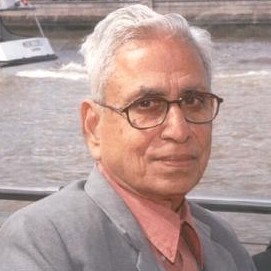
Kalluri Subba Rao 1Prof. Kalluri Subba Rao, Ph.D., D.Sc (IISc), FAS-AP, FAMS, FNASc, FNA., is an Indian National Science Academy Honorary Scientist, working at the School of Medical Sciences, University of Hyderabad, India. He has worked as a Professor of Biochemistry/Neurobiology at the University of Hyderabad, and as an INSA-Senior Scientist/Honorary Scientist & Professor at the Centers for Biotechnology and Innovative Research, Institute of Science and Technology, Jawaharlal Nehru Technological University, Kukatpally, Hyderabad. His research interests include Biochemistry and Molecular Biology of the developing and aging brain with special reference to DNA-damage and its repair. He has more than 120 research publications in national and international journals and books. His contributions include establishing the link between aging and decreased DNA repair, particularly the base excision repair, in the brain. He is presently working on a monograph containing the latest scientific information about the process of aging in higher organisms and also examining the available related traditional Indian (Vedic) concepts. He has advocated for the establishment of Institutes or Centers for multidisciplinary scientific study of the phenomenon of aging and the associated diseases in India.

See: https://ifa.ngo/wp-content/uploads/2014/01/Symposium-Participants-Aging-Process-and-NCDs.pdf

http://www.ifa-fiv.org/ifa-12th-global-conference-on-ageing-symposium/

https://uohyd.academia.edu/SubbaRaoKalluri/CurriculumVitae

https://www.insaindia.res.in/detail.php?id=P03-1348


ISOAD Conference Stanford October 1-2, 2016

logo-ISOADThe next world conference of the International Society on Aging and Disease (ISOAD) will take place in Stanford, California, on October 1-2, 2016. The conference will gather world leading experts in biology of aging and aging related diseases, and will showcase the global advances in the field. The topics will range from interventions for longevity through stem cell research, genetics and systems biology of aging, to public support for aging research. The submission of abstracts and proposals is welcome.

The International Society on Aging and Disease is a leading association of researchers of the biology of aging and aging-related diseases, including hundreds of experts from around the world, with representations in over 20 countries . The previous international conference on aging and disease of the ISOAD in Beijing in 2014 gathered leaders in the field and provided a unique platform for the science of aging http://www.aginganddisease.org/EN/10.14336/AD.2015.0115 as well as for aging research advocacy http://www.aginganddisease.org/EN/10.14336/AD.2014.1210 . The forthcoming conference in Stanford in October 2016 will further contribute to fostering communication among researchers and practitioners working in a wide variety of scientific areas with a common interest in fighting aging and age-related disease. For more information, please go here.

Ilia Stambler, PhD. Outreach Coordinator. International Society on Aging and Disease (ISOAD).

www.isoad.org

Africa Aging Research Directory

logo-ISOADPublished on November 18, 2015:

Currently the WHO Aging Research Directory for Africa is being updated (the latest update was in 2003). All types of aging research are being included, yet hopefully the updated version will include a stronger emphasis on the biological and biomedical research of aging and longevity.

If you know of researchers of aging in Africa or related to Africa, especially involved in biomedical and biological research of aging and longevity, their contact information, or can help connect with them, please let know.

Here is the Africa Aging Research Directory from 2003 that is now being updated.

http://www.who.int/healthinfo/survey/ageing_mds_research_directory.pdf

This can be a wonderful opportunity to strengthen aging and longevity research in Africa, as:

1) It can emphasize the place of Africa in the WHO aging health care agenda.

2) Help the recognition, networking and collaboration of aging researchers in Africa and in relation to Africa.

3) Can strengthen the role of biomedical and biological research of aging in the entire WHO agenda.

Thank you for your help in this important project – strengthening aging research in Africa!

You are also welcome to join the informal longevity activists forums and groups for Africa, both regional and national!

Regional groups:

Longevity Africa
Longecity Africa Regional Forum
Longevity for All – Africa Section
National groups:

– Benin – West Africa – Longevite Afrique de l’Ouest Benin

Group: https://www.facebook.com/groups/LongeviteAfrique/

Additional group: https://www.facebook.com/groups/LongevityBenin/

– Egypt ~ ‘Longevity Egypt’

Group:  https://www.facebook.com/groups/LongevityEgypt/

Additional group: www.facebook.com/groups/LAE

Site: http://www.egyptplus.org/

Additional site: http://longevityegypt.wordpress.com/

– Israel ~ ‘Israeli Longevity Alliance’ (strong connection with Africa)

– Morocco ~ ‘Longevity Morocco’

Group: https://www.facebook.com/groups/LongevityMorocco/

Site: http://www.longevity.ma/

– Nigeria ~ ‘Longevity Nigeria’

Group: https://www.facebook.com/groups/LongevityNigeria/

– South Africa ~ ‘Longevity South Africa’

Group: https://www.facebook.com/groups/LongevitySouthAfrica

Page : https://www.facebook.com/LongevityPartySouthAfrica

– Uganda ~ ‘Longevity Party of Uganda’

Group: https://www.facebook.com/groups/LongevityUganda/


——

Update as of April 10, 2016. And here is the final product of that survey. As per the letter received from WHO Multi-Country Studies Unit:
“We are pleased to inform you that the Directory of Research on Ageing in Africa: 2004-2015 has been uploaded to the UN Population Division website. We would like to take this opportunity to thank you for your contribution to the Directory. We hope it will help enhance your research efforts and collaborations.” (Longevity for All / Israeli Longevity Alliance is also included, pp. 80-81)

http://www.un.org/en/development/desa/population/publications/pdf/ageing/Dir_Research_Ageing_Africa_%202004-2015.pdf

Longevity Day in Georgia

Longevity Day Georgia

An interview by Dr. Jaba Tkemaladze in honor of the International Longevity Day – October 1 – in the Republic of Georgia, in one of Georgia’s most popular newspapers – Asaval Dasavali (p. 34). Entitled: “The first senolitic reached the pharmacy – a means for postponing aging”. Thanks for raising public awareness about longevity research! (Editor’s note: According to the author, thanks to the advocacy efforts of Georgian longevity activists, in 2012, the Georgian government noted increasing longevity as a measure of the success of the government. An interesting precedent!)

http://asavali.ge/archive/asdas/2015/1094/1094.pdf

Интервью Др. Джабы Ткемаладзе в честь Международного Дня Долголетия – 1 Октября – в Грузии, в одной из наиболее популярных газет в Грузии – Асавал Дасавали (стр. 34). Заглавие – “В аптеках появился первый сенолитик – средство, замедляющее старение”. Спасибо за привлечение общественного внимания к теме исследований долголетия!

http://asavali.ge/archive/asdas/2015/1094/1094.pdf

“სააფთიაქო ქსელში გაჩნდა პირველი წამალი სენოლიტიკი, რომელიც დაბერების შემაჩერებელია!”
რამდენი წელი უნდა ცოცხლობდეს ადამიანი, რატომ შემცირდა თანამედროვე მოსახლეობის სიცოცხლის ხანგრძლივობა და რას გვეუბნება ადამიანთა მარადიული ახალგაზრდობის შესახებ მეცნიერული კვლევები? ამ და სხვა საინტერესო საკითხების შესახებ იმმორტოლოგი, ფსიქიატრი ჯაბა ტყემალაძე გვესაუბრება.
_ ჭეშმარიტი მეცნიერის მთავარი ამოცანა ადამიანის ორგანიზმის უკვდავების მიღწევაა, რისთვისაც საჭიროა გაახალგაზრდავების ტექნოლოგიების სრულყოფა და პრაქტიკაში გამოყენება. დღევანდელი გამოთვლებით ადამიანთა გაახალგაზრდავება შესაძლებელი იქნება 2050 წლისათვის. ამ ეტაპზე კი მეცნიერთა მთელი ძალისხმევა მიმართულია იმისკენ, რომ ადამიანები სიბერისგან არ გარდაიცვალონ. აღნიშნული მიზანი სრულად მიღწეული იქნება 2029 წლამდე.
წინა საუკუნეში გამოჩენილმა მეცნიერმა ვეისმანმა საფუძველი ჩაუყარა ადამიანის ორგანიზმის სიცოცხლის ხანგრძლივობის გამოთვლის მეთოდოლოგიას. პრაქტიკულად  ამის გამოთვლა კი შეძლო ლეონარდ ჰეიფლიკმა, რომელმაც დაადგინა, რომ ეს ხანგრძლივობა 120-125 წელია. Mმე ვაგრძელებ მათ მიერ ჩამოყალიბებულ მოლეკულარულ-გენეტიური თეორიის განვითარებას და თამამად შემიძლია ვთქვა, რომ შესაძლებელია ადამიანი 120 წლამდე იყოს მხნედ და ჯანსაღად. ასევე ადამიანთა ორგანიზმის გაახალგაზრდავება შესაძლებელია უსასრულოდ დიდხანს.
ყოველივე ზემოთქმულიდან გამომდინარე, სანამ შეიქმნება რადიკალური გაახალგაზრდავების ტექნოლოგიები, აუცილებელია ადამიანებმა ყველაფერი გააკეთონ, რათა 2050 წლამდე ცოცხლებმა მიაღწიონ. ამისთვის ყველამ უნდა გააცნობიეროს ორგანიზმის დაბერების მიზეზები და ხელი შეუწყოს საკუთარ თავს, რომ სიბერე არ აისახოს მათ ჯანმრთელობაზე.
_ ჯაბა ექიმო, რას აკეთებენ მეცნიერები ადამიანთა დაბერების წინააღმდეგ დღესათვის და შექმნილია თუ არა მედიკამენტები, რომელიც ორგანიზმში დაბერების პროცესებს აჩერებს?
_ 1 ოქტომბერს მთელ მსოფლიოში დღეგრძელობის საერთაშორისო ალიანსის წევრები და მხარდამჭერები აღნიშნავენ დღეგრძელობის დღეს. წელს განსაკუთრებული წელია, რადგან შეიქმნა პირველი, დადასტურებულად მუშა პრეპარატი – “სიბერის გამომრეცხავი”. სააფთიაქო ქსელში გაჩნდა პირველი წამალი სენოლიტიკი, რომელიც დაბერების შემაჩერებელია. ამ პრეპარატის დახმარებით უკვე შესაძლებელია ყველამ 120 წლამდე მიაღწიოს. ეს პრეპარატი არის პირველი და სულ მალე მისი უფრო დახვეწილი და გაუმჯობესებული ვარიანტები გამოჩნდება ფარმაცევტულ ბაზარზე.
_ რა ნივთიერებებს შეიცავს აღნიშნული პრეპარატი და როგორია მისი მოქმედების მექანიზმი?
_ ემბრიონის ჩასახვიდან ადამიანის სიკვდილამდე, ორგანიზმში გროვდება უჯრედები, რომლებიც უნდა მომკვდნენ, მაგრამ სხვა და სხვა მიზეზების გამო ვერ ახერხებენ ამას. დროთა განმავლობაში ისინი გამოყოფენ მომწამლავ ნივთიერებებს. ორგანიზმში დღითი-დღე იზრდება მათი რაოდენობა და ასევე იზრდება მათ მიერ ორგანიზმის მოწამვლის ეფექტებიც. სწორედ ეს უჯრედები აუძლურებს და აბერებს ჩვენს ორგანიზმს.
მეცნიერული კვლევებით დადგინდა, რომ უკვე არსებული ორი პრეპარატის კომბინაცია, იწვევს დაბერების მთავარი მიზეზის “სიბერის უჯრედების” დახოცვას და შეიქმნა სენოლიტიკი. პირველი პრეპარატი არის დიზატინიბი, რომელიც  იყიდება შპრყცელ-ის სახელწოდებით. პრეპარატში ვხვდებით ნივთიერება კვერციტინს, რომელიც მცენარეების ფოთლებში და მარცვლეულში შედის და ბიოდანამატის სახით იყიდება. დიზატინიბი ქრონიკული ლეიკოზების დროს გამოიყენება პროფილაქტიკური მიზნით, სიმსივნის საწინააღმდეგოა და თავისი ქიმიური შემადგენლობით ხოცავს დასუსტებულ უჯრედებს. მეორე პრეპარატი შეიცავს რუტინის წინამორბედ ნივთიერებას, რომელიც მომწარო გემოსია და მისი მიღების დროს ხდება უჯრედების მემბრანების გააქტიურება. მესამე  ნივთიერება, რომლის დამატებაზეც სენოლიტიკის შემადგენლობაში დღეისათვის მუშაობენ მეცნიერები შედის პრეპარატში, რომელიც სიმსივნური უჯრედების გამრავლებას უშლის ხელს. ეს პრეპარატი ებრძვის სიბერის უჯრედებს, რომელთა გამოყოფილი შხამები ორგანიზმს წამლავენ. რაოდენ იდეალურადაც არ უნდა იკვებებოდეს ადამიანი და როგორ ჯანსაღადაც არ უნდა ცხოვრობდეს, თუკი მის ორგანიმზში არიან ბოლო თაობის უჯრედები, რომელშიც არ მოხდა თვითმკვლელობის რეჟიმის ჩართვა, სიმსივნური უჯრედებთან ერთად წამლავენ ორგანიზმს. სენოლიტიკის მიღება კი იძლევა იმის გარანტიას, რომ თუ აგური არ დაეცემა ადამიანს თავში 120 წლამდე იცოცხლებს. ამ ორი ნივთიერების კომბინაცია იწვევს ასეთი უჯრედების დახოცვას, ორგანიზმი გამოდის მოწამვლის წნეხიდან და თვალსაჩინოდ ახალგაზრდავდება. შენოლიტიკის გაუმჯობესებულ ვარიანტს დაემატება მესამე ნივთიერებაც, ანუ სიმსივნის უჯრედების გამრავლების ამკრძალავი ნივთიერება. იმედია, რომ შემდეგი წელი იქნება ასევე სასიხარულო და ალექსანდრე თავართქილაძე დაასრულებს თავის კვლევებს ამ მიმართულებით და სიბერის დაძლევის საშუალებას მიემატება სიკვდილიანობის  გამომწვევი ყველაზე ხშირი მიზეზის – სიმსივნის დაძლევაც.
_ კიდევ რა ფაქტორები თამაშობს დიდ როლს დღეგრძელობაში?
_ მთავარ როლს დღეგრძელობაში თამაშობს მიტოქონდრია, უჯრედის ორგანელა, რომელიც ენერგიის წარმოებას განაგებს. მისი გენომის დაზიანების გამო, სხვადასხვა მიზეზებით დაზიანებული მიტოქონდრიების დახოცვა შესაძლებელია მხოლოდ ფიზიოთერაპიული მეთოდებით. ეს თავის დროზე ილია ვეკუამ შეამჩნია. Mმან აღმოაჩინა, რომ მაღალ მთაში, სადაც ნაკლებია ჟანგბადი და ბარში სადაც მეტია ჟანგბადი, მცხოვრები ადამიანი ერთნაირი დროით ცოცხლობდნენ, მაგრამ ადამიანები, რომლებიც ხან მთაში ცხოვრობდნენ და ხან ბარში, გაცილებით დიდხანს ცოცხლობდნენ. ამის საფუძველზე მან ჩაატარა კვლევები და დაადგინა, რომ თუ ორგანიზმს, პერიოდულად მიაწვდი მთის ჰაერს, ანუ ნაკლებ ჟანგბადს, ხან კი მეტ ჟანგბადს, პათოლოგიური მიტოქონდრიები იღუპებიან. ასევე კვლევების შედეგად დადგინდა, რომ ორგანიზმის მსგავს რეჟიმში ჩაყენება, იწვევს უჯრედების თაობების რაოდენობის გაორმაგებას, რაც აორმაგებს ორგანიზმის რეგენერაციულ უნარი. უჯრედოვანი დონის ქვეშ არის ორგანოიდების დონე, რომლის გამოჯანსაღებაც სენოლიტიკის მიღების ფონზე იძლევა საშუალებას, რომ ადამიანმა 120 წლიანი ბარიერი გადაილახოს. დღეისათვის არსებული მეთოდებიდან საუკეთესოდ ვთვლი ილია ვეკუას მიერ შექმნილ “მთის ჰაერის” აპარატს. ამ აპარატის მეშვეობით ხდება უჯრედებში პათოლოგიური მიტოქონდრიების დახოცვა. შედეგად შესაძლებელია გაორმაგდეს სიცოცხლის ხანგრძლივობა, რადგან ორმაგდება უჯრედების თაობების რაოდენობა.
ჩვენს ორგანიზმში ორგანოიდების დონის ქვემოთ მდებარეობს მოლეკულარული დონე და სამწუხაროდ ჯერ-ჯერობით არ არსებობს არანაირი მედიკამენტოზური ან სხვა მეთოდი, რომელიც ამ დონეზე რადიკალურ გაჯანსაღებას მოახდენს. უჯრედებში დაგროვილი “ნაგავის” გამოტანაზე მუშაობა მიმდინარეობს ნანორობოტების კუთხით და 2035 წლისთვის პირველი ტექნოლოგიები გამოჩნდება ამ კუთხით. მანამდე კი უნდა გვახსოვდეს, რომ ნაგავი ურმით შეგვაქვს ორგანიზმში ყოველდღიურად, მაშინ, როდესაც პეშვითაც ძლივს ვახერხებთ მის გამოტანას. ამიტომაც ძალიან მნიშვნელოვანია წყლის სმის და ჯანსაღი კვების კულტურა. ამით მცირდება ორგანიზმში შეტანილი ნაგავის რაოდენობა და შესაბამისად იზრდება _ გატანილის.
_ ჯაბა ექიმო, სიცოცხლის ხანგრძლოვობაზე რამდენად მოქმედებს სტრესი?
_ სტრესი სიცოცხლის ხანგრძლივობაზე უშუალოდ და უკიდურესად ძლიერად მოქმედებს. მოგახსენებთ, რომ  უჯრედის დონის ზემოთ არის ქსოვილების დონე, რომელის სიჯანსაღე დამოკიდებულია ჰუმორალური სისტემის მდგომარეობაზე. იმისთვის, რომ ჰუმორალური სისტემა იყოს მოწესრიგებული, ადამიანებმა უნდა ისწავლონ ემოციების მართვა და გრძნობების სისუფთავის შენარჩუნება. მე ვთვლი, რომ შინაგანი დიალოგის (აზრების) გაჩერების ტექნიკა ჯერ-ჯერობით უალტერნატივოა იმისთვის, რომ ჰუმორალურმა სისტემამ შეძლოს ნორმალური მუშაობა.
ქსოვილების დონის ზემოთ არის ორგანოების დონე. ამ კუთხით წარმოუდგენლად დიდი წარმატებებია. დღეს შესაძლებელია პრაქტიკულად ყველა ორგანოს ორგანიზმის გარეთ შექმნა. წელს გაჩნდა იმედი, რომ აუღებელი ციხე- სიმაგრე თვალის შექმნა, მალე შესაძლებელი გახდება. აშშ სამხედრო უწყებამ უკვე დაიწყო ამ ორგანოს შექმნის ტენოლოგიის დაფინანსება.
ორგანოების დონის ზემოთ მდებარეობს ინდივიდუალური დონე და ყველაზე ცუდად აქ არის საქმე. არსებული სოციალურ-ეკონომიკური სისტემა ხოცავს ადამიანებს მანამ, სანამ ისინი საპენსიო ასაკს მიაღწევენ. გამოსავალი ან საპენსიო ასაკის გაზრდაშია ან არსებული სისტემის სხვა სისტემით ჩანაცვლებაში. საბედნიეროდ, საქართველო გამონაკლისია ამ მიმართულებით. შეგახსენებთ, რომ 2012 წელს მოხდა პრეცენდენტი, როცა პოლიტიკურმა პარტიამ სახელმწიფო სისტემის წარმატების საზომად ადამიანების სიცოცხლის ხანგრძლივობა აღიარა. ვსარგებლობ შემთხვევით და “ასავალ-დასავალის” მრავალრიცხოვანი მკვითხველის წინაშე კიდევ ერთხელ მადლობას ვუძღვნი ქალბატონ ნინო ანდრონიკაშვილს, რომლის გარეშეც ეს პრეცენდენტი არ მოხდებოდა. ქართველებს გვაქვს უნიკალური შანსი ვაიძულოთ სახელმწიფო დატოვოს ეს საზომი და ქვეყნის წარმატება განისაზღვროს ადამიანების სიცოცხლის ხანგრძლივობის ზრდით.
_ როგორ შევინარჩუნოთ ახალგაზრდობა და ჯანმრთელობა ღრმა სიბერემდე სენოლიტიკის გარეშე?
_ საზოგადოების მთავარი პრობლემა არის ის, რომ ადამიანები შეგუებულები არიან იმ აზრს, რომ დაბერდებიან. ისევ და ისევ ჩვევა იწვევს დაავადებას. დროა ვაღიაროთ, რომ დაბერება დაავადებაა. თუნდაც იმიტომ, რომ ამ დაავადების საწინააღმდეგო წამალი სენოლიტიკი უკვე არსებობს. აუცილებელია ამ დაავადების პროფილაქტიკაც. არც ისე რთულია დილაობით ნახევარი ჭიქა ძირას ნაყენის მიღება. ძირაში, ისევე როგორც ფხალეულში, ალუბალში, წითელ ღვინოში არის კვერციტინის მსგავსი ნივთიერებები. რუტინის მსგავსი ნივთიერება, რომელიც შედის სპეც-პრეპარატში ისეთ საკვებ პროდუქტებში გვხვდება, როგორიცაა წითელი ღვინო, ალუბალი, შინდი, ტყემალი, ძირა და ა.შ. თუკი ადამიანი ხშირად იღებს ამ ტიპის საკვებს, მას გარანტია აქვს, რომ დღეგრძელი იქნება.
თუ ვინმეს დიზატინიბის მიღების ეშინია, სწორი ვარჯიშის შედეგად მაინც უნდა დახოცოს სახსრების ხრტილში მდებარე “სიბერის უჯრედები”. შეგახსენებთ, რომ “სიბერის უჯრედებს” ორგანიზმი სახსრების ხრტილში გადაადგილებს.
სასრწაფოდ უნდა მოწესრიგდეს პურის წარმოება:
1) პური უნდა გამოცხვეს ხარისხაინი, ნიკოტინის მჟავის შემცველი ხორბლისგან.
2) უნდა აიკრძალოს საფუარიანი პურის ტექნოლოგიები.
3) უნდა ხელი შეეწყოს ღვინის ლექის (განსაკუთრებით წითელი ღვინის) შემცველი პურის ტექნოლოგიებს.
დაბერებისგან დამცავი (გეროპროტექტორები) მთავარი ნივთიერებები პურში შემავალი ნიკოტინის მჟავა, მომწარო საკვებში (ძირა, წითელი ღვინო, ფხალეული, ალუბალი) შემავალი კვერციტინის მსგავსი ნითიერებების მიღება ყოველდღიური უნდა გახდეს საზოგადოების ფართო მასებისათვის.
2016 წლის არჩევნებში კი ხმა უნდა მივცეთ იმ პოლიტიკურ პარტიას, რომელიც სახალხოდ და ხაზგასმით აღიარებს ადამიანის სიცოცხლის ხანგრძლივობას სახელმწიფოსა და ხელისუფლების წარმატების საზომად!
ესაუბრა მეგი საჯაია

“В аптеках появился первый сенолитик — средство, замедляющее старение”

Вопрос: 1 октября отмечается как Международный День Долгожительства. Насколько реально продление жиэни?

Задачей истинного учёного является достижение радикального продления жизни человека. Для этого нужно создание технологий омоложения и их массовое применеие. На сегодняшний день это ожидается к 2050 году. Поэтому огромные научные ресурсы мобилизованы для того, чтобы уже рождённые люди не умирали бы от старости. Смерть от старости отменится, по расчётаам Рея Курцвайля, к 2029 году.

Ещё в прошлом веке Вейсман положил оснву методу расчета времени жизни организма. На практике этот метод смог реализовать Леонард Хейфлик. Подсчитав количество поколений клеток, которое может пройти оплодотворённая яйцеклетка (50-60), он смог установить, что человеческий организм может просуществовать 115-125 лет. Мои исследования лежат в русле молекулярно-генетической теории старения, корифеями которой являются Вейсман, Хейфлик. Опираясь на практические данные этой теории, я смело могу сказать, что прожить 120 лет в здравом уме и бодром состоянии может практически любой человек. Результаты исследований в области омоложения, бум которых наблюдается с 1999 года, дает мне смелость утверждать, что радикальное омоложение также возможно сколько угодно раз.

Из всего вышесказанного очевидно, что есть резон не умирать ближайшие 15 лет – до 2029 года. Потом уже в спокойном режиме работать над радикальным омоложением.

Вопрос: Что может предложить сегодня наука для замедления старения? Когда появятся простые в употреблении медикаменты, позволяющие человеку бороться со старением?

1 октября в этом году отмечается с особым энтузиазмом. Весной этого года завершилось исследование, результаты которого без сомнений однозначны – первое лекарство от старости уже есть. Этот сенолитик дает твердую уверенность в том, что уже сейчас возможно продлить жизни людей до 120 лет. Разумеется, одна ласточка весны не делает, Разумеется возможно и нужно исследовать и создавать лучшие препараты. Но факт того, что это уже случилось, полнит энтузиазмом и дает возможность для широких клинических исследований уже сегодня, даже вчера можно было это сделать. Мы перешли черту, за которой нет места скепсису.

Вопрос: Можно узнать, какие вещества в этом лекарстве, каков механизм их действия?

С момента зачатия до смерти в организме человека лавинообразно накапливаются так называемые “клетки старения”. Иммунная система постоянно их уничтожает, но с каждым днем их всё больше, а иммунитет всё слабее. Эти клетки выделяют токсины, которые вредят близлежащим клеткам, тканям, оргнизму в целом. Основной причиной дряхления и ослабления организма после завершения периода роста являются эти самые “клетки старения”, которые не закаанчивают жизнь самоубийством (апоптозом).

Убрав из организма такие клетки, получим ощутимое омоложение. Группа учёных из Клиники Майо в Бостоне подобрали из многих веществ комбинацию двух, которые наиболее эффективно убивают “клетки старения”. Это Дазатиниб и Кверцетин. Дазатиниб это препарат, применяемый при разных формах лейкозов, миелоидном синдроме. Коммерческое название препарата Sprycel. Кверцетин же содержится в листьях, плодах, семенах многих растений, продается как пищевая добавка. Вместе они наиболее эффективно убивают “клетки старения”.

Разумеется нужно и минимум третье вещество, которое отправит раковые заболевания в учебники по истории медицины. Напомню читателям вашей газеты, что над этим работает Александр Таваткиладзе. Надеюсь он сможет преодолеть свою лень и в следующем году порадует нас лекарством, запрещающим раковым клеткам размножение. Такое вещество просто так и просится в состав сенолитика. Ведь раковые клетки так же токсичны как и “клетки старения” и в отличие от них размножаются, причём катастрофически быстро.

Насколько бы идеально не питался бы человек, наколько бы преданно и правильно не следовал здоровому образу жизни, в его организме накапливаются “клетки старения” и раковые клетки, которые источают яд. Периодический приём сенолитика избавит организм от большей части “клеток старения”, а вскором времени решится и проблема опухолевых клеток. И если человек не страдает пока ещё неизлечимым генетическим заболеванием, не настолько идиот, чтобы травиться наркотиками и чрезмерным алкоголем, не станет жертвой несчастного случая, уже можно смело утверждать – все могут жить до 120 лет.

Вопрос: Есть ли ещё факторы, сильно влияющие на долголетие?

На уровне нижеклетки важнейшую роль в долголетии играет митохондрия. Эта органелла заведует производством энергии в клетке. В результате повреждений её генома, появляются потомки с более длинными ДНК. Они размножаются быстрее, чем нормальные потомки с нормальными (относительно короткими) ДНК. Так в клетках начинают преобладать патологические митохондрии. Это обнаружил математик (и любитель спорта) Илья Векуа. В те времена статистика была не почёте, но он ею увлекался. Так вот. Статистическими методами он развеял миф о том, что в условиях высокогорья (воздух раряжен и организм получает мало кислорода) люди живут дольше. Он показал, что и жители долины (воздух плотнее и организм получает больше кислорода) живут лишь ненамного меньше, чем жители высокогорья. Однако те, кому приходится перодически жить в высокогорье и периодически в долинах, живут заметно больше лет. Его знаменитый аппарат “Горный вохдух” был создан уже в Новосибирске и, как говорится, без него. Но главное он успел еще будучи в Тбилиси. Его друзья – морфологи показали, что периодическое дыхание воздухом с малым содержанием кислорода и с обычным содержанием кислорода вызывает гибель патологических, вредных митохондрий. В результате омолаживается клетка. Следующие исследования показали, что в условиях уменьшенного количества кислорда лимит Хейфлика (количество поколений клеток от яйцеклетки до последнего потомка) почти удваивается. То есть, есть возможность преодолеть 120 лет.

Те, кто не имеют финансовой возможности приобрести аппарат “горный воздух”, пусть не перееживают. Если физической активностью добиться удвоения сердцебиения в течение минимум 20 минут, эффект будет таким же. Разумеется, нужно найти хорошего тренера, который подготовит ваш организм к такому физиологическому состоянию.

Пока не существует медикаментозных средств для уничтожения “вредных” митохондрий. Так же не существует медикаментов для удаления “вредных” молекул, которые так же как и “клетки старения” и патологические митохондрии лавинообразно накапливаются день за днём. Подобные средства по рачётам футурологов появятся к 2035 году. Основной акцент они делают на нанороботов. До этого нам следует помнить, что мусор в организм вносится телегами, а выносится горстями. Совершенствуйте культуру питья воды натощак и перед едой, совершенствуйте культуру питания, дыхания и сна. Останавливайте внутренний диалог как можно чаще и как можно дольше – лекарства от стресса скорее всего не избретут.

Вопрос: Каким образом стресс влияет на долголетие?

Прямо и радикально. Выше клеточного находитя тканевой уровень, состояние которго зависит от гуморальной системы регуляции. Чтобы гуморальная система не страдала и управление процессами было бы адекватным, человек должен научиться управлять эмоциями и защищать чистоту чувств. Думаю, что техника остановки внутреннего диалога, всё еще практикуемая последователями грузинских или других традиций пока не имеет альтернативы.

Обязательно надо сказать, что на уровне органов наблюдаются особенно серьёзные успехи. Возможно создание практически любого органа вне организма. В этом году началось взятие последней, одной из неприступных крепостей – глаза. Военное ведомство США начало финансирование в этом направлении.

Над уровнем органов находится организменный, индивидуальный если хотите уровень. Хуже всего дела обстоят здесь. Люди не хотят видеть дальше своего носа.

Сущестующая мировая социально-экономическая система старается убить людей до пенсионного возраста. К счастью, в Грузии в 2012 году к власти пришла коалиция, которая создала прецендент – в программе коалиции записано, что деятельность правителства должна оцениваться увеличением продолхительности жизни людей. Воспользуюсь случаем и перед многочисленной аудиторией поблагодарю Нино Андроникашвили за эту запись. У жителей Грузии появился уникальный шанс- принять этот критерий как государственный, а не партийный. Успех страны, успех правительства должен измеряться долгожительством населения!

Интервью у Д.Ткемаладзе взяла М. Саджая

WHO consultation on the Global Strategy and Action Plan on Ageing and Health

whologoCurrently there takes place the World Health Organization’s consultation on the Global Strategy and Action Plan on Ageing and Health (until October 30). This is an opportunity to emphasize the importance of biological and biomedical research of aging for the development of effective health care for older persons.

Here is the participation page: http://www.who.int/ageing/consultation/en/

It is possible to download the full questionnaire as a Word file and send to HealthyAgeing@who.int Or there is a choice to relate to several or one strategic objective out of the five, for example “Strategic Objective 5: Improving measuring, monitoring and understanding” [of healthy aging]

http://www.who.int/ageing/consultation-strategic-objective5/en/

There may be several quite encouraging elements in the existing draft of the Action Plan, that can be interpreted for the advantage of longevity research. It is just necessary to infuse and emphasize a more biomedical/biological interpretation, as the text allows for different kinds of interpretation.

The Action plan draft is available here: “WHO DRAFT 0: GLOBAL STRATEGY AND ACTION PLAN ON AGEING AND HEALTH”. And it does include what may be interpreted as a strategic objective for biomedical aging research!

http://www.who.int/ageing/global-strategy/GSAP-ageing-health-draft.pdf?ua=1

http://www.who.int/ageing/global-strategy/en/

For example, the Strategic Objective 5: “Improving measuring, monitoring and understanding”, includes Action 1 – “Agreeing on metrics, measures and analytical approaches for Healthy Ageing”. It proposes:

– “developing and reaching consensus on metrics, measurement strategies, instruments, tests and biomarkers for key concepts related to healthy ageing including functional ability, intrinsic capacity, subjective well-being, health characteristics, personal and environmental characteristics, genetic inheritance, multimorbidity and the need for care”

– “reaching consensus on approaches for the assessment and interpretation of trajectories of these metrics and measures over the life course. It will be important to demonstrate how the information generated serves as inputs to policy, monitoring, evaluation, clinical or public health decisions, and their link to the need for health and long-term care and broader environmental change”

AND

– “developing and applying improved approaches for the testing of clinical interventions and population based approaches that take account of the different physiology of older people and multimorbidity” [!]

The Action Plan also includes actions for:

  • “developing evidence informed national Healthy Ageing strategies or plans that are part of overall national plans through a process that involves all stakeholders” (“Strategic Objective 1: Fostering healthy ageing in every country” Action 1)

AND

  • “including core geriatric and gerontological competencies in all health curriculums” (Strategic Objective 2: Aligning health systems to the needs of the older populations. Action 3).

All these objectives and actions can be interpreted to support biomedical research of aging *if* emphasizing the correct biological/biomedical aspects. For example “national healthy aging strategies” must be understood to include biomedical research. And “gerontological competencies” should also be understood as including biogerontology. Otherwise the biological and biomedical interpretation of these objectives can be overwhelmed by conventional social, psychological, assistive technological or lifestyle approaches. The latter approaches are important, but need not exclude the biomedical therapeutic approaches. Still, the basis for a biomedical interpretation exists in these documents, but needs to be emphasized and made more explicit.

For example, to the question of the consultation:

“For Strategic Objective 5, do you think another first-level priority action should be added to this list?”

It may be suggested to add a fourth action: “4) Elucidating basic mechanisms and processes of aging, their relation to disease, and mechanisms of their amelioration for the development of therapies to achieve healthy longevity.”

And to the question for Objective 5 “Do you think another measure of progress could be useful?” it may be suggested to add the measure: “Consensus occurs on metrics, measurement strategies, instruments, tests and biomarkers for the formal, biological and clinical, definition of aging and for the effectiveness of interventions and therapies against aging-related ill health”.

These kinds of biological/biomedical interpretations need to be emphasized both now at the stage of consultation and at the later stages of implementation!

There are also some encouraging elements in the recently issued “World Report on Aging and Health” (October 1, 2015)

http://www.who.int/ageing/events/world-report-2015-launch/en/

http://apps.who.int/iris/bitstream/10665/186463/1/9789240694811_eng.pdf?ua=1

For example the report includes a section entitled “Reframing medical research” (pp. 113-114). It has such pro-biomedical-research statements as:

“Much medical research is focused on disease. This prevents a better understanding of the subtle changes in intrinsic function that occur both before and after the onset of disease and the factors that influence these changes…. Specifically, more research is needed that looks at how commonly prescribed medications affect people with multimorbidity, which is a departure from the typical default assumption that the optimal treatment of someone with more than one health issue is to add together different interventions. And outcomes need to be considered not only in terms of disease markers but also in terms of intrinsic capacity.”

Furthermore, the report states: “This will require the reallocation of budgets, which are currently relatively small in ageing-related research” and quotes Fontana et al. article in Nature (2014) “Medical research: Treat ageing” in support of that statement! (http://www.nature.com/news/medical-research-treat-ageing-1.15585)

Still, the biological and therapeutic interpretation of medical research of aging will need to be emphasized, or there is again the risk it will be pushed to the corner or even suppressed by non-biological and non-therapeutic approaches.

For example that “intrinsic function” or “intrinsic capacity” that the report wishes to improve is very vaguely defined as “the composite of all the physical and mental capacities that an individual can draw on”. This can be given to all kinds of functionalist, mentalist or even downright non-rigorous and unscientific interpretations. But it can also be given more scientific content based on biomarkers of aging and formal clinical definitions of aging. This scientific content may need to be stronger emphasized in the consultation and in the later stages of the action plan’s implementation.

There is also the simultaneously present, but apparently little related to the aging action plan – “International Classification of Functioning, Disability and Health (ICF)” which seems to hardly even mention aging or the “intrinsic function” in aging.

http://www.who.int/classifications/icf/en/

The ICF hypothesizes that “it is possible to see if people with similar levels of difficulty are receiving similar levels of support services irrespective of age such as when there are separate systems for aged or younger individuals with disabilities” (ICF Manual, p. 78). But the evaluation of aging-related disability is lacking.

The addition of a scientifically grounded biomedical classification of aging-related disability and function may greatly increase the utility of the ICF (currently feedback is requested by WHO on “A Practical Manual for using the International Classification of Functioning, Disability and Health (ICF)”

http://www.who.int/classifications/drafticfpracticalmanual2.pdf?ua=1

This addition to the ICF may be parallel to an addition of some clinically applicable, practical definition or classification of aging or senility within The International Classification of Diseases (ICD). The addition of aging to the ICF as an impairment of biological function may be actually easier than outright defining aging as a disease.

(See on senility as a part of ICD http://www.icd10data.com/ICD10CM/Codes/R00-R99/R50-R69/R54-/R54 Consider also that senility is currently considered a “garbage code” in the ICD http://www.sciencedirect.com/science/article/pii/S0140673612617280 )

Most importantly, all these texts and their interpretations may remain on paper, unless they are backed up by some actual local involvement, both at the grass roots and professional level, at the stage of implementation. It is very unclear to me personally how this implementation could work at the level of countries and institutions. But apparently it is at that “lower” level where the real action will need to happen. And the WHO seems to acknowledge this. As the global strategy and action plan (GSAP) draft states (p. 22):

“Contributions aligned to the GSAP from countries, non-state actors including older adults, civil society organizations, multilateral agencies, development partners and those who develop, manufacture and distribute aids, equipment or pharmaceuticals to improve intrinsic capacity or functional ability, can transform the action plan from a document to a movement.”

So, in a sense, the implementation and interpretation of whatever is written in those documents will largely depend on “us”, on the individual and organizational involvements. If the longevity advocates are vocal, active and influential, the WHO authorities will need to “come to us” for the implementation of their plans..

PS. There is little doubt that, if active enough, the longevity advocates can emphasize the importance of biomedical research of aging. For example, watch this video on centenarians that was just released by the UN Department of Economic and Social Affairs – Division for Social Policy and Development ! The authors refer to this video as a “call to action” – there is a growing realization that achieving healthy longevity is possible. But it will still be the job of longevity advocates to emphasize that in order to actually make it possible and accessible to people we need the scientific “know-how”!

https://www.youtube.com/watch?v=eBP8ycObpbU&feature=youtu.be

Ilia Stambler, PhD. Outreach Coordinator. International Society on Aging and Disease (ISOAD)

www.isoad.org

ilia.stambler@gmail.com

Improving Longevity in Nigeria

Improving Longevity in Nigeria

By Agbolade Omowole

Why is the average life expectancy in Nigeria 52 years? In Europe, it is 81 on the average. The average life expectancy worldwide is 71. Why is it low in Nigeria?

Is it ignorance? It is said that if you want to hide something from an African, put it inside a book. But that has to change. The future is more important than the past.

Today, October 1, is Nigeria’s Independence Day celebration and doubles as the UN international day of older persons and the international longevity day. Thanks to the research on aging of scientists who are working on extending human’s health span.

Let us ask, what can be done to increase the average life expectancy in Nigeria?

Join Longevity Nigeria: https://www.facebook.com/groups/424397067745808/

See “ICT, imperative for sustainable development in Nigeria— Omowole” http://www.vanguardngr.com/2015/11/ict-imperative-for-sustainable-development-in-nigeria-omowole/

See Adedayo Oluseun Adedeji. Longevity in Nigeria: What and what Really Matters? http://www.iiste.org/Journals/index.php/JEDS/article/view/20003

See also: Ilia Stambler. A short greeting/presentation for the International Longevity Day in Nigeria. View the video here: Longevity Day Nigeria

Ilia Stambler. Longevity Promotion With Information & Communication Technology. Remote presentation for the 2015 Nigeria ICT Festival http://ieet.org/index.php/IEET/more/stambler20151220

Statement on Longevity in Bulgaria

STATEMENT ON LONGEVITY AND TRASHUMANISM
On behalf of all participants of the 8th international & interdisciplinary conference “Vanguard scientific instruments in management ‘ 2015” (VSIM:15), held in the town of Ravda (Bulgaria), 9 – 13 September 2015 http://vsim-conf.info/en/  We would like to state the following:

We are happy to celebrate October the 1-st, International Longevity Day!

– Events and promotions around that day, increasing education on biological and biomedical research of aging and longevity, are now planned in over 30 countries, on 5 continents. The participants in this campaign advocate that the status and support of this scientific field should be improved within the general framework of aging advocacy and support for older persons. http://www.longevityforall.org/international-longevity-day
– We fully support the position paper on the “Critical need to promote research of aging and aging-related diseases to improve health and longevity of the elderly population”, briefly describing the rationales, technologies and policies needed to promote this research http://www.longevityforall.org/the-critical-need-to-promote-research-of-aging

We would like to see this to become the most massive global movement and we are ready to support it by all possible ways.

We are standing strongly for Radical Life Extension, Personal Enhancement and Transhumanism!

– It turns out that the most intriguing topic on the Conference was “Transhumanism, Longevity, Cybernetics”: 9 papers, including 2 teleconferences abroad (Israel, Canada), 7h. discussion time, Follow up letter: https://gallery.mailchimp.com.pdf
– Main conclusions from the discussion are:
The concepts of Longevity and Transhumanism are still far from being popular and need further dissemination. Myths and prejudices overflow the public opinion.
Education is the key factor for success. It is destroying myths, changing minds and disseminating new ideas. In addition this is what we can do best. Therefore:
we will continue to develop a full scale academic course “Principles of Longevity and Transhumanism” in addition to the existing blocs of lectures;
we will develop an educational game “The Great Transhumanist Game” on the base of our experience in the field of educational games and computer simulations;
we will continue to collect and fill in the data base with annotated educational links, a specialized Wiki and all sorts of on-line educational resources;
attention should be paid in preparation of “Train the trainers” program, having in mind that millions of people must be educated.
– It is time to establish a private research and education center (and business incubator) on “Longevity and Transhumanism” in Sofia.
– We will publish our results in the electronic journal “VANGUARD SCIENTIFIC INSTRUMENTS IN MANAGEMENT” (ISSN 1314-0582) http://vsim-journal.info. Contributors are welcome.
– A precursor for a political party “Bulgarian Longevity and Transhumanist Party” will be created in the near future.
– Consider all above as a “To Do List” for this year and for the coming years. Most important: do something every day! Even a small step, but every day!
Transhumanists of the world unite – we have immortality to gain and only biology to lose!

Sofia, October 1-st 2015

prof. PhD eng. Angel Marchev 1.0
Chairman of the Conference Committee

аsist. prof. PhD Angel Marchev 2.0
Eudaimonia Production Ltd.


קידום רווחת הקשישים והמחקר הרפואי-טכנולוגי למענם כחלק של האג’נדה המדינית

Israeli Longevity Alliance

שלום רב

 הננו פונים אליך בשם האיגוד הבינלאומי לחקר ההזדקנות ומחלות הזקנה

International Society on Aging and Disease – ISOAD

http://isoad.org

 האיגוד מקדם חקר הזדקנות ומחלות הזקנה במטרה לשפר את התוחלת החיים הבריאה של אוכלוסיית הקשישים. בין השאר, אנחנו פונים לארגונים חברתיים-פוליטיים במטרה לקדם תחום זה. מסמך העמדה של הארגון, שפורסם לאחרונה, מצביע על הצורך החיוני לתמוך בתחום, לא רק לרווחת הקשישים אלא כצורך קיומי כלכלי והישרדותי של החברה כולה.

 ראה המאמר

The Critical Need to Promote Research of Aging, A&D, 6, 2015

באנגלית

http://www.aginganddisease.org/EN/10.14336/AD.2014.1210

ובעברית

http://www.longevityforall.org/the-need-to-promote-aging-research-hebrew

 אנחנו מבקשים להעלות את נושא שיפור מצבה ובריאותה של אוכלוסיית הקשישים בישראל ובפרט קידום המחקר והפיתוח הרלוונטיים, כחלק מרכזי בקביעת מדיניות המחקר והבריאות במדינת ישראל.

 קידום המחקר והפיתוח להארכת חיים בריאים גם עשוי לתרום לקידום מרכיבים אחרים של הפיתוח האנושי, כגון איכות החיים, החוזק הכלכלי, חינוך ושלום.

 ראה המאמר

The Pursuit of Longevity – The Bringer of Peace to the Middle East, CAS, 6, 2014

http://www.eurekaselect.com/122295/article

 דרכי התמיכה שאנחנו מצדדים בהן כוללות הגדלת המימון, תמריצים ותמיכה ממסדית למחקר ופיתוח שנועדו באופן ספציפי לעיכובו והקלתו של תהליך ההזדקנות הניווני ולהארכת תוחלת החיים הבריאה לכלל האוכלוסיה.

 מגמות העלייה בתוחלת החיים הבריאים, בנוסף לממצאי מחקר בסיסי ויישומי אודות תהליך ההזדקנות, מצביעים על האפשרות המעשית של התערבות בתהליך ההזדקנות ובמחלות הכרוניות הנגזרות ממנו, וכתוצאה מכך על האפשרות של הארכת חיים בריאים לאוכלוסיה המבוגרת.

 ראה למשל המאמר

Stop Aging Disease! ICAD 2014, A&D, 6, 2015

http://www.aginganddisease.org/EN/10.14336/AD.2015.0115

 בהינתן תמיכה מספקת, מחקר ופיתוח אלה עשויים להאריך את תוחלת החיים הבריאים לאוכלוסיה המבוגרת, להגביר את תקופת תעסוקתם ותרומתם לפיתוח החברה הישראלית, ולהעצים את תחושת ההנאה, היעוד, השוויון והערך בחייהם.

 בפרט, אנו מבקשים לתמוך בהמשכה והרחבתה של תוכנית מענקי המחקר ל”מדע, טכנולוגיה וחדשנות למען האוכלוסייה בגיל השלישי” שהוקמה על ידי משרד המדע, הטכנולוגיה והחלל ב-2014, על כל מרכיביה הכוללים טכנולוגיות, מדעי החיים והרפואה, ומדעי החברה וההתנהגות, ובפרט מדעי החיים והרפואה החיוניים לעלייה בתוחלת החיים הבריאה והפרודוקטיבית בישראל. אנחנו קוראים להגדיל את תקציבה של תוכנית זו ולהרחיב את תשתיתה הממסדית, כמו כן להקים תוכניות דומות ושיתופיות גם במשרדים רלוונטיים אחרים, כגון משרד הבריאות והמשרד לאזרחים ותיקים.

 ראה אודות התוכנית ל”מדע, טכנולוגיה וחדשנות למען האוכלוסייה בגיל השלישי”

http://most.gov.il/Information/Calls/Pages/JC2.aspx

http://www.israel21c.org/news/rd-for-the-elderly

 אנחנו גם קוראים לעודד את הפעילות של “העמותה הישראלית להארכת חיים (ע”ר)”, המקדמת מחקר ופיתוח למען הארכת חיים בריאים, המסונפת בישראל לאיגוד הבינלאומי לחקר ההזדקנות ומחלות הזקנה (ISOAD), האיגוד הבינלאומי לקידום אריכות החיים (ILA), קרן מחקר SENS וארגונים בינלאומיים נוספים הפועלים למטרות דומות.

 http://www.longevityforall.org/join-the-israeli-longevity-alliance-international-longevity-alliance-israel

 בימים אלה מופצת מטעם ה-ISOAD קריאת תמיכה נוספת באנגלית.

http://isoad.org/Show.aspx?info_lb=640&info_id=1569&flag=571

http://ieet.org/index.php/IEET/more/stambler20150207

 נודה מאד על תמיכתכם במאבק!

 בכבוד רב

בשם הועד הפועל של ה-ISOAD

דר’ איליה סטמבלר

מנהל תיאום פעולות של ה-ISOAD. נציג ה-ISOAD בישראל.

יו”ר העמותה הישראלית להארכת חיים

ilia.stambler@gmail.com

 03-961-4296 ; 0522-2283-578

 http://isoad.org

 http://www.singulariut.com

 http://www.longevityforall.org

 http://www.longevityhistory.com


Join the Israeli Longevity Alliance – International Longevity Alliance (Israel)

ILA and ISLA FINAL

Dear friends,

On May 1, 2014, there was registered the Israeli Longevity Alliance. It was registered as an integral and constitutive part of the International Longevity Alliance (as said in our bylaws, # 20b).
http://www.singulariut.com/2015/08/817

Now we would like to strengthen our ties with the international longevity movement, and indeed strengthen the international longevity movement. Thus, we would like to invite longevity activists from around the world to join our Alliance – the Israeli Longevity Alliance / International Longevity Alliance (Israel).

To apply, you can simply send the letter of the following content (as required by our bylaws # 1b), to longevityforallinfo@gmail.com or directly to the acting chair of the allianceilia.stambler@gmail.com

“I (name, address, email) request to be admitted as a member of the Israeli Longevity Alliance. The objectives of the Alliance are known to me. If admitted as a member I undertake to comply with the provisions of the articles of the Alliance and with the decisions of the Alliance’s general assembly.”

We would also be grateful if you add in the letter a few words about yourself and your interest in life extension, as well as the ways *you personally* would be willing and ready to contribute to the work of our organization and of the longevity movement at large (such as building websites for longevity content in different languages, writing or translating pro-longevity materials, organizing pro-longevity meetings in your area, contacting politicians and media, scientific expertise, any other skills, expertise, or suggestions of activity).

Alternatively, you are welcome to fill in the application form online (in English or Hebrew) http://goo.gl/forms/ExDJc7z01t

If you can represent an NGO from anywhere in the world, you are welcome to join your NGO as a member of the Alliance (NGOs can join the Alliance as members through their representatives exactly as individual members would). In this way, we can also build up the alliance or network of pro-longevity NGOs internationally.

The Israeli Longevity Alliance has been at the forefront of the longevity movement in Israel. Its members were instrumental in organizing national conferences on longevity (e.g. on October 1, 2013, during the first International Longevity Day), and March 27, 2014, during Israel Science Day, as well as petitioned the authorities and organized smaller events and publications throughout the year. We strive to intensify longevity research activism. For example we promote the position paper of the International Society on Aging and Disease (ISOAD, with which our Alliance is also affiliated) on “The Critical Need to Promote Research on Biology of Aging and Aging-related Diseases to Improve Health and Longevity of the Elderly Population.” It is available in 9 languages, including Hebrew.

http://www.longevityforall.org/the-critical-need-to-promote-research-of-aging-around-the-world/

We invite longevity activists from around the world to join forces, both here in Israel and everywhere.

Presently, the membership is free, at least until the end of 2015.

The next General assembly will apparently need to be conducted with the help of a video chat system (as currently required by the bylaws # 8b, until a possible different technical solution is found), though the general proceedings and discussions can be done via email or social media. E.g. https://www.facebook.com/groups/LongevityIsrael/

https://www.facebook.com/Israeli-Longevity-Alliance-617816694947283/timeline/

Together we will act as mutual catalysis to encourage longevity activism around the world!

Ilia Stambler, PhD, Chair. Israeli Longevity Alliance / International Longevity Alliance (Israel)

International Longevity Day – October 1, 2015 – Press release

International Longevvity Day

Dear friends,

There has been emerging a tradition by longevity researchers and activists around the world to organize events dedicated to promotion of longevity research on or around October 1 – the UN International Day of Older Persons.

This day is sometimes referred to in some parts of the longevity activists community as the “International Longevity Day”. As this is the official UN Day of Older Persons, this provides the longevity research activists a perfect opportunity to emphasize the importance of aging and longevity research for the development of effective health care for the elderly, in the wide public as well as among decision makers.

Events and promotions around that day, increasing education on biological and biomedical research of aging and longevity, are now planned in over 30 countries, on 5 continents. The support ranges from small, emerging local grassroots groups of longevity research activists to scientific societies. http://www.longevityforall.org/international-longevity-day-october-1-2015/

Initiatives toward that day vary from meetings and seminars, including online and recorded meetings and presentations in different languages, through special publications, to special promotions, for example, the distribution of a free e-book on the history of longevity science (http://www.longevityhistory.com/), a short film contest on life extension (http://www.heales.org/nhs/index.php/8-english/48-2015compshortmov) or fundraising actions for longevity research by a crowd-funding platform (http://www.lifespan.io/) and an outreach platform (https://www.fightaging.org/fund-research/ ). Additional events, meetings and promotions are welcome!

The participants in this campaign advocate that the status and support of this scientific field should be improved within the general framework of aging advocacy and support for older persons.

And preparations are already made for the next year’s International Day of Older Persons. Thus, on October 1-2, 2016, the International Society on Aging and Disease (ISOAD) will hold its next international conference, that will take place at the University of Stanford CA, US (http://isoad.org/content.aspx?info_lb=600&flag=103 ). In 2014, the ISOAD conference in Beijing provided an excellent venue for scientific presentation http://www.aginganddisease.org/EN/10.14336/AD.2015.0115 as well as public advocacy for aging research http://www.aginganddisease.org/EN/10.14336/AD.2014.1210 with leading researchers from around the world showcasing the advance and promise of the field and calling for its increased support. Hopefully, the 2016 conference in Stanford will continue the tradition of excellence. The list of topics ranges from interventions for longevity through stem cell research, metabolism, age-related cardiovascular and neurodegenerative diseases, genetics and systems biology of aging, protein oxidation and DNA damage and repair, immunity and translational studies of aging, to public support for aging research, and more.

http://isoad.org/content.aspx?info_lb=605&flag=103

The conference will involve leading scientists and provide a broad international platform for cooperation and knowledge exchange. http://isoad.org/content.aspx?info_lb=628&flag=103

The submission of abstracts and proposals is started and welcome.

http://isoad.org/content.aspx?info_lb=604&flag=103

Additional events and promotions, as well as outreach to relevant decision makers and officials, drawing their attention to the critical importance of biological and biomedical research of aging for the sustainable aging society, are welcome.

Hopefully, thanks to such meetings and promotions, the importance of the field will be widely recognized, and the support for the field will be increased.

Thank you for your support.

Ilia Stambler, PhD

Outreach Coordinator. International Society on Aging and Disease – ISOAD

www.isoad.org

ilia.stambler@gmail.com

http://www.longevityforall.org/international-longevity-day-october-1-2015/

http://www.longevityforall.org/international-longevity-day-october-1-2015-press-release/

https://www.facebook.com/LongevityDay

https://www.facebook.com/events/1017229998296364/


International Longevity Day – October 1, 2015

International Longevvity DayDear friends,

There has been emerging a tradition by longevity researchers and activists around the world to organize events dedicated to promotion of longevity research on or around October 1 – the UN International Day of Older Persons.

This day is sometimes referred to in some parts of the longevity activists community as the “International Longevity Day”. As this is the official UN Day of Older Persons, this provides the longevity research activists a perfect opportunity, perhaps even a perfect “excuse”, to emphasize the importance of aging and longevity research for the development of effective health care for the elderly, in the wide public as well as among decision makers.

The critical importance and the critical need to promote biological research of aging derives from the realization that tackling the degenerative processes and negative biological effects of human aging, at once and in an interrelated manner, can provide the best foundations to find holistic and effective ways for intervention and prevention against age-related ill health. Such an approach has been supported by scientific proofs of concept, involving the evidential increase in healthy lifespan in animal models and the emerging technological capabilities to intervene into fundamental aging processes. The focus on intervention into degenerative aging processes can provide solutions to a number of non-communicable, age-related diseases (such as cancer, heart disease, type 2 diabetes and neurodegenerative diseases), insofar as such diseases are strongly determined by degenerative aging processes (such as chronic inflammation, cross-linkage of macromolecules, somatic mutations, loss of stem cell populations, and others). This approach is likely to decrease susceptibility of the elderly also to communicable, infectious diseases due to improvements in immunity. The innovative, applied results of such research and development will lead to sustainable, economically viable solutions for a large array of age-related medical and social challenges, that may be globally applicable. Furthermore, such research and development should be supported on ethical grounds, to provide equal health care chances for the elderly as for the young.

Therefore it is the societal duty, especially of the professionals in biology, medicine, health care, economy and socio-political organizations, to strongly recommend greater investments, incentives and institutional support for the research and development dealing with the understanding of mechanisms associated with the human biological aging process and translating these insights into safe, affordable and universally available applied technologies and treatments.

October 1 – the International Day of Older Persons — provides the researchers and advocates an opportunity to raise these points and make these demands.

http://www.longevityforall.org/the-critical-need-to-promote-research-of-aging-around-the-world/

In 2013, events during or around that day – ranging from small meetings of friends to seminars and rather large conferences, alongside special publications, distributions of outreach materials (petitions and flyers) and media appearances – were held in over 30 countries, and in 2014 in over 20 countries.

Sometimes the events’ dates vary several days around October 1, or even through the entire month of October, designated as the “International Month of Older Persons” or the “International Longevity Month”, and sometimes the events are organized independently and without prior knowledge of other events, but they are all nonetheless unified by the common action and purpose.

http://www.longevityforall.org/october-1-international-day-of-older-persons-longevity-day-2013-2014/

Let us maintain and strengthen this tradition! Let us plan and organize a mutually reinforcing network of events worldwide. If you plan to organize an event for that day or month – either live meetings or on-line publications and promotions – please let your plans be known to encourage others. Together we can create an activism wave of strong impact. 

Among the materials for discussion, distribution and promotion, one may use the position paper on the “Critical need to promote research of aging and aging-related diseases to improve health and longevity of the elderly population”, briefly describing the rationales, technologies and policies needed to promote this research. The position paper is available in 9 languages and can serve as a “universal advocacy paper” both for the grass roots discussions and promotions and for the outreach to officials http://www.longevityforall.org/the-critical-need-to-promote-research-of-aging-around-the-world/. Also one may use in the preparation a presentation briefly listing some topics in longevity science promotion, such as the feasibility and desirability of achieving healthy longevity and public actions that can be taken to achieve it http://www.longevityhistory.com/articles/ab7.php . One may also consider using or modifying the following template flyers, from the Longevity Day campaigns of 2013 Longevity Day – Flyer Template – 2013 and the present 2015 Longevity Day – Flyer Template – 2015 or any other materials of your choice.

For the Longevity Day and Month celebrations in 2015, following the collection of a number of longevity promoting events worldwide in honor of that day, a general public appeal was issued and widely disseminated.

Among others, this campaign was endorsed by several prominent associations for the advancement of aging research, including:

International Association of Gerontology and Geriatrics – European Region – IAGG-ER (http://www.iagg-er.net/) as well as the international IAGG Secretariat http://iagg.info/xe/iagg_news/14762 ; http://iagg.info/data/newsletter_v20/newsletter_20-08_2015.pdf ; the International Federation on Ageing (IFA) http://www.ifa-fiv.org/idop-celebrates-longevity/ ; the US Healthspan Campaign http://healthspancampaign.org/newsletters/august-2015/ ; http://healthspancampaign.org/newsletters/september-2015/  ; Alliance for Aging Research http://www.agingresearch.org ; International Society on Aging and Disease http://isoad.org ; JenAge http://info-centre.jenage.de/ageing/meetings-calendar.html  ; SENS Research Foundation http://www.sens.org/ ; Maximum Life Foundation http://www.maxlife.org/ ; Institute for Ethics and Emerging Technologies http://ieet.org/index.php/IEET/more/stambler20150831  ; Fight Aging https://www.fightaging.org/archives/2015/09/october-1st-is-international-longevity-day-events-are-planned.php ; Humanity+ http://hplusmagazine.com/2015/10/01/longevity-day-2015/  ; World Future Society https://www.facebook.com/World-Future-Society ; national gerontological associations in several countries.

Yet, the strength of the appeal depends on the strength of all the individual events and actions.

Events for that day – including meetings, publications and promotions – have been organized around the world, in over 40 countries on 5 continents, including:

1. In the US, a conference was held at the headquarters of the International Society on Aging and Disease (ISOAD), at the University of North Texas Health Science Center, in Fort Worth, Texas (http://isoad.org/).  Also in the US, video conferences were held by the Movement for Indefinite Life Extension (MILE ) campaign and by the Christian Transhumanist Association (CTI).

A special promotion was done by LEAF – Life Extension Advocacy Foundation – via its crowdfunding platform for longevity research (http://www.lifespan.io/). A fundraising action was launched on that day for SENS Research Foundation by Fight Aging (https://www.fightaging.org/fund-research/).

2. In Israel, a seminar was held in Bar Ilan University, by the Israeli Longevity Alliance. Further outreach was done in schools and via dedicated publications. Toward that day, Israeli activists also freely distributed an e-book on the history of longevity research (http://www.longevityhistory.com/).

3. In Moscow, Russia, a conference was organized by the Russian Longevity Alliance. Another large conference took place in Moscow, on the “Quality of Life of Older Persons”, supported by the Gerontological Society of the Russian Academy of Sciences, focusing on geroprotective substances and therapies.

4. In Gomel, Byelorussia, at the end of September, a conference took place on the general subject of Radiobiolgy, at the Institute of Radiobiology of the National Academy of Sciences of Byelorussia, with a leading section on the biology of aging and longevity (“gerontological aspects of man-made factors”).

5. Another  small conference took place in New Delhi, India, organized by Future Tech and the Solutions For the Future, with the help of India Future Society, and other groups. Toward that day, India Future Society also started a crowdfunding campaign to develop a website dedicated to advancement of emerging and life-extending technologies.

6. A series of promotions was organized in Pakistan, by the Pakistan National Academy of Young Scientists and the University of Lahore. The newly formed Pakistan Aging Research Society (PARS) organized an entire month long campaign, “Go for Life” – from September 1 until October 1 – to encourage physical activity of older persons, as well as held a special promotion.

7. In Rome, Italy, a conference was organized by the Italian Transhumanist Association, the Italian Longevity Alliance and several other Italian progressivist and life-extensionist organizations ( http://www.meteoweb.eu/2015/10/scienza-roma-il-24-ottobre-si-terra-il-longevity-day-italia/524667/ ; http://www.longevityday.it/; photos)

8. In Manila, Philippines, a new advocacy group on emerging technological applications to medicine, in particular aging research, was initiated in honor of that day.

9. Also in Potrugal, at the University of Porto a meeting was held by the Human Genetics Group .

10. Additional meetings and promotions were done by the European Healthy Life Extension Society (HEALES) in Brussels, Belgium, including a Competition for the Best Short Film on Life Extension. The winners: First Prize, Second First Prize ; Third Prize.

11. In Germany, meetings were held by two new officially registered political parties that emphasize the development of biomedical research in their programs: in Berlin, by the German Health Research Party and in Stuttgart by the German Transhumanist Party. At the end of September, there also took place in Germany the (unrelated) conference on the Treatment of Elderly Patients: The Challenge of the Future, in Halle, accompanied by workshops on Bioinformatics in Ageing Research. And out of Bremen, Germany, a promotional video on longevity research (the bioengineering approach) was created as a part of the campaign, on behalf of Science Communicator, by Hashem Al-Ghaili, which reached over 1 million views on Imgur, Facebook, Youtube and Reddit.

12. An online promotion (videoconference) in Spanish was held by the Venezuela Longevity Alliance (together with longevity activists from across Latin America).

13. A similar videoconference (recorded) in Portuguese was organized for Brazil by the Brazil Longevity Alliance. A special publication and a radio interview in honor of that day were issued. A conference took place at the HCor- Hospital do Coração, in the state of Sao Paulo, Brazil, which held a dialogue with health professions and aging experts. The event program was created to emphasize the importance of aging and longevity research for the development of effective health care for the elderly. The event theme: “The ageing populations and the impact on health services”. And yet another online conference on longevity science and esthetics was organized from Piúma, Brazil.

14. An on-line promotion of the day was done in Colombia by Vida Prolongada (http://vidaprolongada.com/), promoting the position paper on the “critical need to promote research of aging” in Spanish.

15. An online event was held in Spain by the new association Movimiento Transhumanista founded by Alianza Futurista‘s working group. A special promotion and endorsement of The Longevity Day initiative and the position paper on the “Crticial Need to Promote Research of Aging” were done by the AECES – Asociación Española para el Estudio Científico del Envejecimiento Saludable, Spanish Association for the Scientific Study of Healthy Ageing. (http://www.longevidad.org/)

16. A meeting and a pro-longevity documentary promotion were done in Helsinki by Longevity Finland – Pitkäikäinen Suomi. 

17. In Slovakia, longevity activists distributed flyers advocating for public promotion of longevity research.

18. A meeting was held in Stockholm, Sweden, by Aldrandefonden/Svenska Livsförlängningssällskapet SLFS – Swedish Life Extension Society http://www.aldrandefonden.se/.

19. In the UK, the London Futurist community celebrated longevity research as a part of a discussion of emerging technologies in London.

20. In Larnaca, Cyprus, the ELPIS Foundation, together with the local gerontological community, held a seminar “Health in Older Life” in honor of that day.

21. In Perth, Australia, a meeting was held by the “Healthy Longevity Philosophy” society. Another promotion was done by Science, Technology and the Future society in Melbourne, Australia, including interviews with prominent longevity researchers and advocates such as Dr. Aubrey De Grey, Chief Science Officer of SENS Research Foundation. 

22. In Kiev, Ukraine, a seminar is organized by longevity activists on behalf of the Kiev Institute of Gerontology of the Ukrainian Academy of Medical Sciences.

23. In Beijing, China, a meeting was organized by the Technium community.

24. In Uganda, the Kasese Freethinkers Sports Academy educated about the connection between physical activity and longevity and the benefits and causes of healthy longevity.

25. A mini-seminar is being organized in Lagos, Nigeria, by Longevity Nigeria group, as well as an on-line promotion of longevity.

26. In Romania, a conference is being held at Äna Aslan National Institute of Gerontology and Geriatrics, in Bucharest, toward the end of October (as a part of the “Longevity Month”). This was preceded by online promotions and meetings of Romanian longevity activists.

27. In Vietnam, Hanoi, the Vietnam Public Health Association held a conference on the Mental Health of the Elderly, emphasizing biomedical research on neurodegenerative diseases.

28. In Singapore, a seminar on biology of aging was organized at CREATE – Campus for Research Excellence and Technological Enterprise. This precede a large Biology of Aging Conference organized by the Singapore Immunology Network (A*Star) – not “officially” a part of the “Longevity Day” events, but perhaps of the “Longevity Month.”

29. At about the same time, the 10th Asia / Oceania Congress of Gerontology and Geriatrics 2015 for “Healthy Aging Beyond Frontiers” will take place in Chiangmai, Thailand, including sections on biology of aging.

30. In Paris, France, a seminar was organized at the Biopark Cancer Campus, University Paris Sud. Another meeting took place in Paris at Centre de Recherches Interdisciplinaires (CRI – Center for Interdisciplinary Research) on behalf of Longévité & Santé . And yet another event was conducted in Paris in association with the “Longevity Day” – the screening of the film “Immortalists”.

31. In South Korea, the Korean Branch of Solutions for the Future organized a meetup in Seoul.

32. In Switzerland, Zurich, the Swiss Longevity Alliance organized a mini-conference on longevity research. This will shortly follow a large international symposium on geroprotectors in Basel.

33. In Poland, the Warsaw University Students Association supported the organization of a discussion on life extension science. This followed an (unrelated) conference on Healthy Aging in Warsaw. Also, on October 1, a new site was initiated by longevity activists from Krakow http://agingandlongevity.pl/en/aging-and-longevity/

34. In Canada, at Huntington University, an event was held by the Canadian Institute for Studies in Aging (CISA). In Alberta University, Canada, a special discussion on Technology and the Future of Medicine was dedicated to that day. And yet another meetup was held in Vancouver on behalf of the Lifespan Society of British Columbia.

35. In Iran, a study group was conducted in Tehran on behalf of the Iran Longevity Alliance  http://www.iranlongevity.com/.

36. Yet another study group was held in Cairo, Egypt, by the Egyptian Longevity Alliance http://www.egyptplus.org/.

37. And yet another free discussion of longevity science will take place in Tirana, Albania – the first longevity research activism event in the country. 

38. An on line promotion was done by South African longevity activists. They have also promoted the Longevity Day campaign through the People’s Health Movement, emphasizing the urgent need to improve the longevity in South Africa and Africa generally.

39. A small meeting of longevity activists was held in Taipei, Taiwan. This preceded the (unrelated) “Aging Innovation Week” in Taipei.

40. In Bulgaria, events toward the International Longevity Day started earlier in September with a conference in Ravda, organized by the University for National and World Economy, Department of Management and BASAGA – Bulgarian Academic Simulation and Gaming Association, including a section on Futurism, Transhumanism and Longevity, and continuing up to the date itself with more live and online discussions and publications and a special appeal in honor of that day.

41. In Tokyo, Japan, Exponential Technologies Institute held a promotion of longevity science in the framework of Tokyo-Singularity-Meetup.

42. A meeting was held in the National Library in Tbilisi, Georgia, by activists of the Georgian Longevity Alliance, including presentations on the development of longevity science in Georgia and the world, and debates. In honor of that day, an article was published in one of Georgia’s most popular newspapers – Asaval Dasavali http://www.longevityforall.org/longevity-day-in-the-republic-of-georgia/

43. In Morocco, a new website dedicated to promotion of longevity research was initiated by the For Bladi Association http://www.longevity.ma/.

44. In Amsterdam, the Netherlands, an event was organized by the WAAG Do It Yourself Biology (DIY-BIO) Society.

Thanks to all the organizers and participants! Please add your support and more events and publications for this initiative now and in the future! If you would like to get involved, please let know!

You are also welcome to promote this initiative on social media:

https://www.facebook.com/events/1017229998296364/

https://www.facebook.com/LongevityDay

Preparations for the next year’s International Longevity Day – October 1 – already started as well. The next global conference of the International Society on Aging and Disease (ISOAD) will take place in Stanford on October 1-2, 2016. The topics will range from interventions for longevity through stem cell research, genetics and systems biology of aging, to public support for aging research. The submission of abstracts and proposals is already started and welcome. And a conference is being planned in Brussels, for September 29-October 1, 2016, by the European Healthy Life Extension Society – Heales.

Hopefully, thanks to these and many other events, in this year and in the years to come, the importance of biological aging and longevity research will gradually become a strong theme of the international healthcare agenda, for the elderly and for the entire population.

Ilia Stambler, PhD.

Outreach coordinator. International Society on Aging and Disease (ISOAD)

http://isoad.org/

ilia.stambler@gmail.com

Thank you!

A Necessidade Crítica de Promover a Pesquisa em Envelhecimento ao Redor do Mundo

logo-ISOAD

A Necessidade Crítica de Promover a Pesquisa em Envelhecimento ao Redor do Mundo

Abaixo está a carta de posição sobre A Necessidade Crítica de Promover a Pesquisa em

Envelhecimento da Sociedade Internacional sobre Envelhecimento e Doença (International

Society on Aging and Disease – ISOAD). Este documento detalha brevemente o raciocínio,

tecnologias e políticas que são necessárias para promover esta pesquisa. Portanto, ele pode

servir como uma defesa da aplicação geral ou de lobby em diferentes países. Por favor, ajude a

difundi-lo. Por favor, contribua para o maior reconhecimento possível e apoio à investigação

biológica sobre o envelhecimento e doenças relacionadas ao envelhecimento. Agradecemos

aos leitores por fazer circular esta carta de posição, compartilhá-la em suas redes sociais,

enviá-la para os políticos, potenciais benfeitores e os meios de comunicação, organizar grupos

de discussão para discutir as questões levantadas (que mais tarde podem se transformar em

grupos de pesquisa e ativismo da longevidade em diferentes países), traduzir esta carta de

posição para o seu idioma, dando referência e link a ela, inclusive republicá-la em parte ou

completa (por exemplo, recomendações políticas podem caber em um panfleto de uma

página), juntar-se a ISOAD ou outra organização sobre pesquisa e divulgação de

envelhecimento e longevidade.

Originalmente publicado na revista Aging and Disease, 6 (1), 2015, ISOAD.

http://www.longevityforall.org/the-critical-need-to-promote-research-of-aging-around-the-world/

http://www.aginganddisease.org/EN/10.14336/AD.2014.1210

A necessidade crítica de promover a investigação sobre o envelhecimento e doenças

associadas ao envelhecimento para melhorar a saúde e longevidade da população idosa

Resumo

Devido ao envelhecimento da população global e o derivado crescimento ligados a doenças

não-transmissíveis relacionadas com o envelhecimento e seu peso econômico, há uma

necessidade urgente de promover a investigação sobre o envelhecimento e doenças

relacionadas ao envelhecimento, como forma de criar uma longevidade saudável e produtiva

para a população idosa. Para atingir este objetivo, promovemos as seguintes políticas: 1)

Aumentar o financiamento para a pesquisa e desenvolvimento dirigido especificamente para

retardar os processos degenerativos do envelhecimento e prolongar a expectativa de vida

saudável e produtiva da população; 2) Fornecer um pacote de incentivos para as organizações

comerciais, acadêmicas, públicas e governamentais para incentivar tal compromisso em

pesquisa e desenvolvimento; e 3) estabelecer e expandir as estruturas de coordenação e

consulta, programas e instituições ligadas ao envelhecimento investigação, desenvolvimento e

educação na academia e indústria, agências de política pública para níveis

supragovernamentais e governamentais.

O desafio do envelhecimento da sociedade e potenciais soluções

Durante as últimas décadas, a esperança média de vida aumentou globalmente, chegando a

uma média global de cerca de 70 anos em 2014 (seis anos mais do que em 1990) e cerca de 80

nos países desenvolvidos (em comparação com cerca de 50 em países desenvolvidos no início

do século XX). Esta evolução tem sido particularmente atingida através de melhorias nos

cuidados de saúde, os avanços da medicina, o aumento dos padrões de vida e declínio nos

índices de mortalidade infantil. Atualmente, enquanto as expectativas de vida mais longa

ainda estão nos países “desenvolvidos”, os maiores e mais rápidos aumentos foram

registrados nos países “em desenvolvimento”. Dada a demografia da população mundial entre

2000 e 2050 a proporção de pessoas com mais de 60 anos vai dobrar de cerca de 11% a 22%, o

que, em termos absolutos, um aumento de 605 milhões a 2 bilhões de pessoas [1-3].

Apesar do aumento da expectativa de vida geralmente refletir o desenvolvimento humano

positivo, novos desafios estão surgindo. Eles surgem do fato de que o envelhecimento ainda

está intrinsecamente associado com declínio biológico e cognitivo, embora a gravidade, a

velocidade de declínio cognitivo, a fragilidade física e deficiências psicológicas possam variar

entre os indivíduos.

Todavia, processos degenerativos de envelhecimento são as principais causas subjacentes de

doenças não-transmissíveis, incluindo câncer, isquemia cardíaca, acidente vascular cerebral,

diabetes tipo 2, Alzheimer etc. A deterioração da saúde mental devido a doenças

neurodegenerativas crônicas representam a principal causa de incapacidade em todo o

mundo, representando mais de 20% dos anos vividos com incapacidade. Portanto, maiores

esforços devem ser direcionados para a cura. De acordo com a Organização Mundial de Saúde

(OMS) no “Duodécimo Programa Geral de Trabalho” (13 de abril de 2013), uma das principais

prioridades da OMS é “Enfrentar o desafio das doenças não-transmissíveis” [4], e abordar o

envelhecimento se encaixa nesta definição e é inclusive necessário para atender a essa meta

prioritária.

Envelhecimento também aumenta o risco de morbidade e mortalidade por doenças

infecciosas, como pneumonia e influenza. Além disso, a suscetibilidade à lesão ou trauma

(como quedas e contusões), devido à deterioração do equilíbrio e estado mental, e até mesmo

sujeitos a violência, é fortemente aumentada pelo processo de envelhecimento. Ademais, o

processo de envelhecimento exacerba e fortalece os efeitos de outros fatores de risco para

doenças não-transmissíveis (uso de tabaco, dietas não saudáveis, inatividade física e consumo

excessivo de álcool). Em suma, a deterioração da saúde relacionada ao envelhecimento é uma

das principais causas de mortalidade e morbidade no mundo inteiro e deve ser tratada de

acordo com a gravidade do problema. Tendo em conta esses efeitos severos e negativos, o

envelhecimento é agora visto como um dos maiores desafios econômicos e sociais que a

maioria dos países – especialmente no mundo industrializado – irão enfrentar nas próximas

décadas.

Vários relatórios de governos nacionais, organizações internacionais como as Nações Unidas

(ONU) e OMS, bem como as companhias de seguros, organizações de bem-estar e

organizações não-governamentais (ONGs), têm se referido aos desafios socioeconômicos e de

saúde das sociedades em envelhecimento. Esses incluem:

> Aumento dos custos dos planos de saúde e estresse financeiro para os sistemas de segurança

social devido ao aumento do risco de doenças relacionadas à idade.

> A demência é muitas vezes mencionada como particularmente problemático já que exige

mais cuidados intensivos, que impõem um pesado fardo sobre os familiares que trabalham ou

exigem custos adicionais significativos para a provisão de cuidados profissionais.

> Uma força de trabalho em declínio já está ocorrendo, especialmente nos países

industrializados. Embora as pessoas queiram ficar ativas no trabalho por mais tempo, elas

podem ser incapazes, devido ao comprometimento cognitivo e físico.

> Um número crescente de pensionistas precisa ser financiado, enquanto um número maior de

trabalhadores precisa prestar cuidados médicos que devem manter preços acessíveis.

> Existem preocupações substanciais sobre a condição de qualidade de vida e idoso devido a

doenças relacionadas à idade, à degeneração biológica e ao aumento do risco de sucumbir a

condições de doenças graves e com risco de vida.

> Um declínio geral na qualidade de vida priva muitos idosos em qualquer atividade social,

cultural ou intelectual.

O desafio da sociedade em envelhecimento tem sido amplamente reconhecido e vários

programas de pesquisa e desenvolvimento ao redor do mundo começaram a abordar as

doenças relacionadas ao envelhecimento, tais como a Campanha para prevenir a doença de

Alzheimer e o Programa de Prevenção a Diabetes da OMS, bem como o desenvolvimento de

tecnologias, como robôs cuidadores, detectores de queda e tecnologias para Ambientes de

Vida Assistida, ou tornar as acomodações e infraestruturas mais amigáveis e acessíveis para

casas mais antigas. Embora tais investimentos sejam louváveis ​​e compreensíveis, dada a

urgência do problema, todos eles representam soluções pontuais.

Em particular, as tecnologias de apoio, as mudanças de infraestrutura ou melhoria das

instalações de enfermagem não resolvem o problema central da degeneração biológica

associada ao envelhecimento. Os esforços da investigação médica e desenvolvimento está

atualmente focada em doenças específicas, tais como a doença de Alzheimer, doença cardíaca,

osteoporose, diabetes, câncer, etc. Os processos degenerativos subjacentes do

envelhecimento, determinantes para o surgimento dessas doenças , são muitas vezes

subestimados, não ganhando ênfase.

Enquanto o processo de envelhecimento degenerativo, que envolve a acumulação de danos

estruturais, o equilíbrio metabólico prejudicado e o seu funcionamento é um processo

debilitante que exige prevenção e tratamento. Alcançar a longevidade saudável, caracterizada

pela manutenção da capacidade funcional e robustez, é a sua cura.

Alguns dos efeitos do processo de envelhecimento degenerativo podem ser modificados por

fatores sociais e econômicos, bem como estilo de vida (dieta, exercícios etc.), mas apenas de

forma modesta. Em seguida, há uma necessidade de promover uma pesquisa na área da

biologia do envelhecimento e doenças relacionadas à idade como o caminho para melhorar

mais substancialmente a saúde dos idosos.

Novos rumos em pesquisas e desenvolvimento tomam uma abordagem mais holística para

combater os processos degenerativos e os efeitos biológicos negativos do envelhecimento

humano, abordando diversas causas fundamentais do envelhecimento e doenças relacionadas

à idade, concomitantemente e de forma interligada. Por exemplo, no Congresso Geroscience

das Instituições Nacionais de Saúde dos Estados Unidos, de 2013, as seguintes áreas de

pesquisas prioritárias foram identificadas: Adaptação ao Estresse, Epigenética, Inflamação,

Danos Macromoleculares, Metabolismo, Proteostase e Células-tronco/Regeneração [10,11],

mas há muitos outros exemplos de abordagens semelhantes, priorizando a pesquisa de

grandes conjuntos de processos de envelhecimento [12-17]. Em vez de apontar doenças

relacionadas à idade em particular, os próprios mecanismos de envelhecimento estão sendo

analisados, a fim de que se encontre formas de intervenção e prevenção. Estas abordagens são

muito promissoras pelas seguintes razões:

> Elas já são suportadas por provas científicas de conceito, envolvendo o evidente aumento

saudável da expectativa de vida de modelos animais e as capacidades tecnológicas emergentes

para intervir no processo fundamental de envelhecimento [12,18-23].

> Elas podem fornecer soluções para uma série de doenças não-transmissíveis relacionadas ao

envelhecimento, na medida em que essas doenças são fortemente determinadas por

processos degenerativos do envelhecimento (como inflamação crônica, reticulação de

macromoléculas, mutações somáticas, perda de populações de células-tronco e outros) [24-

28]. Além disso, é provável que reduza a suscetibilidade dos idosos às doenças transmissíveis

devido a melhorias na imunidade [29].

> Os inovadores e aplicados resultados da pesquisa e desenvolvimento levarão a soluções

sustentáveis para uma grande variedade de desafios médicos e sociais relacionados com a

idade.

> Tal pesquisa e desenvolvimento devem ser apoiados em bases éticas, para proporcionar

igualdade de acesso aos cuidados de saúde para os idosos e os jovens.

Portanto, é dever da sociedade, especialmente dos profissionais em Biologia, Medicina,

Biomedicina, Cuidados de Saúde, Economia e organizações sociopolíticas, recomendar

fortemente o aumento do investimento em pesquisas e desenvolvimentos dedicados à

compreensão dos mecanismos associados ao processo biológico de envelhecimento humano e

transformar essas descobertas em tecnologias e tratamentos seguros, acessíveis e

universalmente disponíveis.

Assim sendo, podem haver grandes benefícios para a sociedade, a economia e a qualidade de

vida em geral para priorizar e acelerar a pesquisa, desenvolvimento e inovação nesta área,

incluindo o seguinte:

– A medicina regenerativa – incluindo o desenvolvimento de células-tronco e seus produtos,

regeneração de órgãos e tecidos in vivo e ex vivo, a morte celular controlada, imunossupressão

de células senescentes ou células cancerosas.

– Engenharia de Tecidos – Cultivo e fusão de uma ampla variedade de órgãos e tecidos de

reposição, vasculares e não-vasculares, utilizando métodos como a impressão 3D, “andaimes”

(polímeros) biodegradáveis, biorreatores ou auto-organização.

– Regulação da homeostasia de todo o corpo, incluindo a regulação do ritmo circadiano, e

biorreguladores neuro-humorais moleculares.

– Substâncias Gerontoprotetoras – Por exemplo, antiglicêmico, estatinas, anticoagulantes,

antioxidantes, moduladores de hormônios, moduladores da mitocôndria, anti-inflamatórios,

probióticos e biomedicamentos.

– Desintoxicação no nível celular e molecular – por exemplo, agentes quelantes, adsorção

enteral, digestores de produtos de glicação avançada (AGE-breakers), despolimerização redox,

imunidade ativa, liberação enzimática etc.

– Suplementação Dietetica – Estabelecimento de requisitos nutricionais na dieta dos idosos e

durante todo o curso da vida, por exemplo, o uso de suplementação com vitaminas,

microelementos, compostos macroérgicos.

– Terapia Gênica – A engenharia genética e estimulação farmacológica segura de “genes da

longevidade” (por exemplo Sirtuins e FOXO), atenuação dos “Fatores Aceleradores de

Deterioração” (DAF), manipulação de caminhos genéticos que promovem a longevidade (por

exemplo, via mTOR), estimulação da atividade da telomerase, a interferência do RNA,

sequenciamento e mapeamento genético e epigenético.

– Nanomedicina – Por exemplo, nanopartículas para administração farmacêutica, protótipos

emergentes de imunidade artificial, micro e nano-dispositivos fornecedores de oxigênio e

dispositivos para a reparação de tecidos macromoleculares.

– Substituição com órgãos artificiais e estímulo eletrofisiológico – por exemplo, próteses

funcionais e órgãos, neuropróteses, interfaces “cérebro-computador” avançadas, estimulação

eletrofisiológica de funções neurológicas e musculares danificadas.

– Autoquantificação – abrangente automonitoramento e diagnósticos personalizados das

condições vitais e daquelas relacionadas ao envelhecimento, regimes calculados para uma

alimentação saudável e equilibrada e atividade física suficiente para os idosos.

– Mineração de Dados – grandes dados analíticos sobre a saúde, descobrimento de

intervenções candidatas eficazes, modelos do processo de envelhecimento, doenças e

intervenções antienvelhecimento que sejam formais e quantitativos e, ainda, que sejam

também visualmente acessíveis e interativos.

– Criopreservação e Quimiopreservação – benéfica para o transplante de órgãos ou tecidos e

para um conhecimento mais profundo sobre a fisiologia do envelhecimento.

Apontar processos debilitantes associados com o envelhecimento através de meios

biomédicos deve tornar-se uma abordagem inovadora e poderosa e um padrão médico para a

prevenção de doenças não-transmissíveis que afetam principalmente pessoas em estágios

avançados da vida. O objetivo da medicina preventiva para os idosos, utilizando tecnologias

biomédicas avançadas, é preservar a saúde de uma pessoa em envelhecimento para evitar

comprometimento funcional.

Os governos devem assegurar a criação e implementação das seguintes políticas para

promover a pesquisa sobre a biologia do envelhecimento e sobre doenças relacionadas ao

mesmo, a fim de melhorar a saúde da população idosa global:

1) Financiamento:

Garantir um aumento significativo do financiamento governamental e não-governamental

para pesquisas dirigidas por metas (translacional) na prevenção dos processos degenerativos

do envelhecimento, deficiências e doenças crônicas não-transmissíveis para prolongar a vida

saudável e produtiva, durante todo o curso da vida.

Especificamente:

– Dedicar uma parte designada do orçamento dos ministérios relevantes, tais como os

ministérios da saúde e/ou da ciência, particularmente nas divisões relativas à pesquisa

e tratamento de doenças crônicas não-transmissíveis.

– Dedicar uma porcentagem específica do rendimento dos lucros comerciais de

empresas farmacêuticas, biotecnológicas e de tecnologias médicas para essa pesquisa

e desenvolvimento.

– Estabelecer bolsas de pesquisa relevantes, com base em competência e dirigida para o

alvo.

– Dobrar o financiamento para esse tipo de pesquisa a cada 5 anos pelos próximos 20

anos.

2) Incentivos:

Desenvolver e adotar quadros jurídicos e regulamentares que forneçam incentivos para a

pesquisa e desenvolvimento. Criados, especificamente, para indicar o desenvolvimento,

registro, administração e acessibilidade de medicamentos, tecnologias médicas e outras

terapias que retardam o processo de envelhecimento e suas doenças correlacionadas e,

finalmente, prolongar a vida.

Especificamente:

– Desenvolver critérios relativos à eficácia e segurança de terapias gerontoprotetivas.

– Facilitar experimentos in silico, em animais e experimentos éticos e, sobretudo,

seguros, em humanos.

– Implantar e garantir terapias gerontoprotetivas na condição de terapias adjuvantes

com potencial para prolongar a vida.

– Proporcionar um percurso de aprovação encurtado para terapias com alto nível de

evidência de eficácia em ensaios clínicos e pré-clínicos, bem como em casos de

degeneração avançada e condições aparentemente fúteis.

– Garantir especial reconhecimento, reputação e benefícios a entidades comerciais e

públicos envolvidos em tal pesquisa e desenvolvimento.

3) Instituições:

Estabelecer e expandir a coordenação e estruturas de consultoria nacionais e internacionais,

programas e instituições destinados a promover a pesquisa, o desenvolvimento, a educação

sobre a biologia do envelhecimento e doenças relacionadas e o desenvolvimento de diretrizes

clínicas para modular os processos de envelhecimento e assim estender o tempo de vida

saudável e produtivo para a população.

Especificamente:

– Criar a especialização de Biogerontólogo, além de cursos em Biogerontologia como

parte um currículo comum nas universidades.

– Desenvolver e disseminar regimes gerontoprotetivos, com base nas melhores

evidências disponíveis, como parte das recomendações de saúde autorizadas.

– Estabelecer centros cooperativos de excelência para estudos fundamentais,

translacionais e aplicados, além de centros de análise estratégica, previsão, educação e

desenvolvimento de políticas sobre envelhecimento e pesquisa em longevidade. Tanto

em instituições acadêmicas como em várias agências governamentais e

supragovernamentais.

Estas medidas destinam-se a reduzir a carga dos processos de envelhecimento sobre a

economia e aliviar o sofrimento dos idosos e a dor emocional de seus entes queridos. Do lado

positivo, se for recebido apoio suficiente, essas medidas podem aumentar a expectativa de

uma vida saudável em idosos, que prorroga o período de produtividade e sua interação com a

sociedade, e aumenta a sua sensação de prazer, propósito igualdade e valorização da vida [30].

Sociedade Internacional Sobre Envelhecimento e Doença (ISOAD)

Comitê Executivo:

Prof. Kunlin Jin. Department of Pharmacology and Neuroscience, University of North Texas, Health Science

Center. Fort Worth, Texas, USA. ISOAD Chair

Email: kunlin.jin@unthsc.edu

Prof. James W. Simpkins. Center for Basic and Translational Stroke Research, West Virginia University.

Morgantown, West Virginia, USA. ISOAD President

Email: jwsimpkins@hsc.wvu.edu

Prof. Xunming Ji. Department of Neurosurgery, Xuanwu Hospital, Capital Medical University. Beijing, China.

ISOAD Vice Chair

Email: jixunming@vip.163.com

Dr. Miriam Leis. Fraunhofer Society for the Advancement of Applied Research. Munich, Germany. ISOAD Policy

Advisor

Email: miriam.leis@zv.fraunhofer.de

Dr. Ilia Stambler. Department of Science, Technology and Society, Bar Ilan University. Ramat Gan, Israel. ISOAD

Outreach Coordinator

Email: ilia.stambler@gmail.com

Tradução: Fabiane Pohlmann de Athayde

Referências:

[1] World Health Organization (2014). World Health Statistics – Large Gains in Life Expectancy. Accessed

December 2014. Retrieved from: http://www.who.int/mediacentre/news/releases/2014/world-health-statistics-

2014/en/.

[2] Human Mortality Database. Accessed December 2014. Retrieved from: http://www.mortality.org.

[3] United Nations, Department of Economic and Social Affairs, Population Division (2011). World Population

Prospects: The 2010 Revision, CD-ROM Edition. Accessed December 2014. Retrieved from:

http://esa.un.org/wpp/.

[4] World Health Organization (2013). Draft Twelfth General Programme of Work. Accessed December 2014.

Retrieved from: http://www.who.int/about/who_reform/programme_priority/en/.

[5] World Health Organization (2014). Ageing and Life Course. Accessed December 2014. Retrieved

from:http://www.who.int/ageing/en/.

[6] United Nations, Department of Economic and Social Affairs, Population Division (2013). World Population

Aging Report. Accessed December 2014. Retrieved from: http://www.un.org/en/development/desa/population/.

[7] The International Longevity Center Global Alliance (2010). Global Aging Report. Threats to Longevity. A Call

to Action. Accessed December 2014. Retrieved from: http://www.ilc-alliance.org/index.php/reports/.

[8] Lozano R, Naghavi M, Foreman K, Lim S, Shibuya K, Aboyans V, et al. (2012). Global and regional mortality

from 235 causes of death for 20 age groups in 1990 and 2010: a systematic analysis for the Global Burden of

Disease Study 2010. Lancet, 380:2095-2128.

[9] Lim SS, Vos T, Flaxman AD, Danaei G, Shibuya K, Adair-Rohani H, et al. (2012). A comparative risk

assessment of burden of disease and injury attributable to 67 risk factors and risk factor clusters in 21 regions,

1990–2010: a systematic analysis for the Global Burden of Disease Study 2010, Lancet, 380:2224-2260.

[10] Kennedy BK, Berger SL, Brunet A, Campisi J, Cuervo AM, Epel ES, et al. (2014). Geroscience: linking aging

to chronic disease. Cell, 59:709-713.

[11] Healthspan Campaign (2013). NIH Geroscience Interest Group (GSIG) Releases Recommendations from the

October 2013 Advances in Geroscience Summit. Accessed December 2014. Retrieved

from:http://healthspancampaign.org/2014/02/27/nih-geroscience-interest-group-gsig-releases-

recommendations-october-2013-advances-geroscience-summit/

[12] Fahy GM, West MD, Coles LS, Harris SB (Eds). The Future of Aging: Pathways to Human Life Extension.

New York: Springer; 2010.

[13] Fontana L, Kennedy BK, Longo VD, Seals D, Melov S (2014). Medical research: treat ageing. Nature,

511:405-407.

[14] López-Otín C, Blasco MA, Partridge L, Serrano M, Kroemer G (2013). The hallmarks of aging. Cell, 153:1194-

1217.

[15] De Grey ADNJ, Rae M. Ending Aging. The Rejuvenation Breakthroughs That Could Reverse Human Aging in

Our Lifetime. New York: St. Martin’s Press; 2007.

[16] Goldman DP, Cutler D, Rowe JW, Michaud PC, Sullivan J, Peneva D, Olshansky SJ (2013). Substantial

health and economic returns from delayed aging may warrant a new focus for medical research. Health Aff,

10:1698-1705.

[17] Rae MJ, Butler RN, Campisi J, de Grey ADNJ, Finch CE, Gough M, et al. (2010). The demographic and

biomedical case for late-life interventions in aging. Sci Transl Med, 2:40cm21.

[18] Kanfi Y, Naiman S, Amir G, Peshti V, Zinman G, Nahum L, et al. (2012). The sirtuin SIRT6 regulates lifespan

in male mice. Nature, 483:218-221.

[19] Atala A. Extending life using tissue and organ replacement (2008). Curr Aging Sci, 1:73-83.

[20] Baati T, Bourasset F, Gharbi N, Njim L, Abderrabba M, Kerkeni A, et al. (2012). The prolongation of the

lifespan of rats by repeated oral administration of [60] fullerene. Biomaterials, 33:4936-4946.

[21] Kheir JN, Scharp LA, Borden MA, Swanson EJ, Loxley A, Reese JH, et al. (2012). Oxygen gas-filled

microparticles provide intravenous oxygen delivery. Sci Transl Med, 4:140ra88.

[22] Shawn M. Douglas SM, Bachelet I, Church GM (2012). A logic-gated nanorobot for targeted transport of

molecular payloads. Science, 335:831-834.

[23] Kennedy BK, Pennypacker JK (2014). Drugs that modulate aging: the promising yet difficult path ahead.

Transl Res, 163:456-465.

[24] Chung HY, Cesari M, Anton S, Marzetti E, Giovannini S, Seo AY, et al. (2009). Molecular inflammation:

Underpinnings of aging and age-related diseases. Ageing Res Rev, 8:18-30.

[25] Lunn JS, Sakowski SA, Hur J, Feldman EL (2011). Stem cell technology for neurodegenerative diseases. Ann

Neurol, 70:353-361.

[26] Baylis D, Bartlett DB, Patel HP, Roberts HC (2014). Understanding how we age: insights into inflammaging.

Longev Healthspan, 3:6.

[27] Dai DF, Chiao YA, Marcinek DJ, Szeto HH, Rabinovitch PS (2014). Mitochondrial oxidative stress in aging

and healthspan. Longev Healthspan, 3:6.

[28] Zieman S, Kass D (2004). Advanced glycation end product cross-linking: Pathophysiologic role and

therapeutic target in cardiovascular disease. Congest Heart Fail, 10:144-149.

[29] Bredenkamp N, Nowell CS, Blackburn CC (2014). Regeneration of the aged thymus by a single

transcription factor. Development, 141:1627-1637.

[30] This position paper of the International Society on Aging and Disease (ISOAD) was published on behalf of

the ISOAD Executive Committee as: Kunlin Jin, James W. Simpkins, Xunming Ji, Miriam Leis, Ilia Stambler

(2015). The critical need to promote research of aging and aging-related diseases to improve health and longevity

of the elderly population. Aging Disease, 6(1):1-5

http://www.aginganddisease.org/EN/10.14336/AD.2014.1210

ILA BRAZIL MANIFESTO

Nós defendemos o avanço de uma longevidade saudável para toda a população através da investigação científica, saúde pública, defesa e ativismo social. Enfatizamos e promovemos a luta contra o principal inimigo de uma longevidade saudável – o processo de envelhecimento.

O processo de envelhecimento é a raiz da maioria das doenças crônicas que afligem a população mundial. Esse processo é responsável pela maior parte da incapacitação e mortalidade, e precisa ser tratado apropriadamente. A sociedade precisa dedicar esforços para o seu tratamento e correção, assim como para qualquer outra doença material.

O problema do envelhecimento é grave e ameaçador. No entanto, muitas vezes testemunhamos a um esquecimento quase completo da sua realidade e gravidade. Há uma sútil tendência em ignorar-se o futuro, para distrair a mente do envelhecimento e da morte por envelhecimento, e até mesmo apresentar o envelhecimento e a morte sob uma luz enganosa, apologética e utópica. Ao mesmo tempo, há uma crença infundada de que o envelhecimento é um processo completamente incontrolável e inexorável. Essa desconsideração do problema e sensação infundada de impotência não contribuem para a melhoria do bem-estar dos idosos e de uma longevidade saudável. Há uma necessidade de apresentar-se o problema em sua gravidade e importância e atuar para a sua solução ou mitigação para o melhor do nosso potencial.

Nós convidamos a todos a elevar a consciência pública sobre o problema do envelhecimento em toda sua abrangência. Nós convidamos o público a reconhecer esse problema grave e dedicar esforços e recursos – inclusive econômicos, sócio-políticos, científicos, tecnológicos e midiáticos – a sua redução máxima possível ao benefício do processo de envelhecimento da população, por uma longevidade saudável. Nós promovemos a ideia de que a maturação mental e espiritual e o aumento de uma longevidade saudável não são sinônimos de envelhecimento e deterioração.

Defendemos o reforço e aceleração da pesquisa biomédica básica aplicada, bem como o desenvolvimento da inovação tecnológica, industrial, ambiental, de saúde pública e medidas educativas, especificamente direcionados a uma longevidade saudável. Se suficiente apoio for dado, essas medidas podem aumentar a expectativa de uma vida saudável da população idosa, o seu período de produtividade, a sua contribuição para o desenvolvimento da sociedade e da economia, bem como o seu senso de propósito, prazer e valorização da vida.

Defendemos que seja dado ao desenvolvimento de medidas científicas e ao prolongamento da vida saudável a maior quantidade de apoio público e político possível, não apenas através da comunidade profissional, mas também através do grande público.